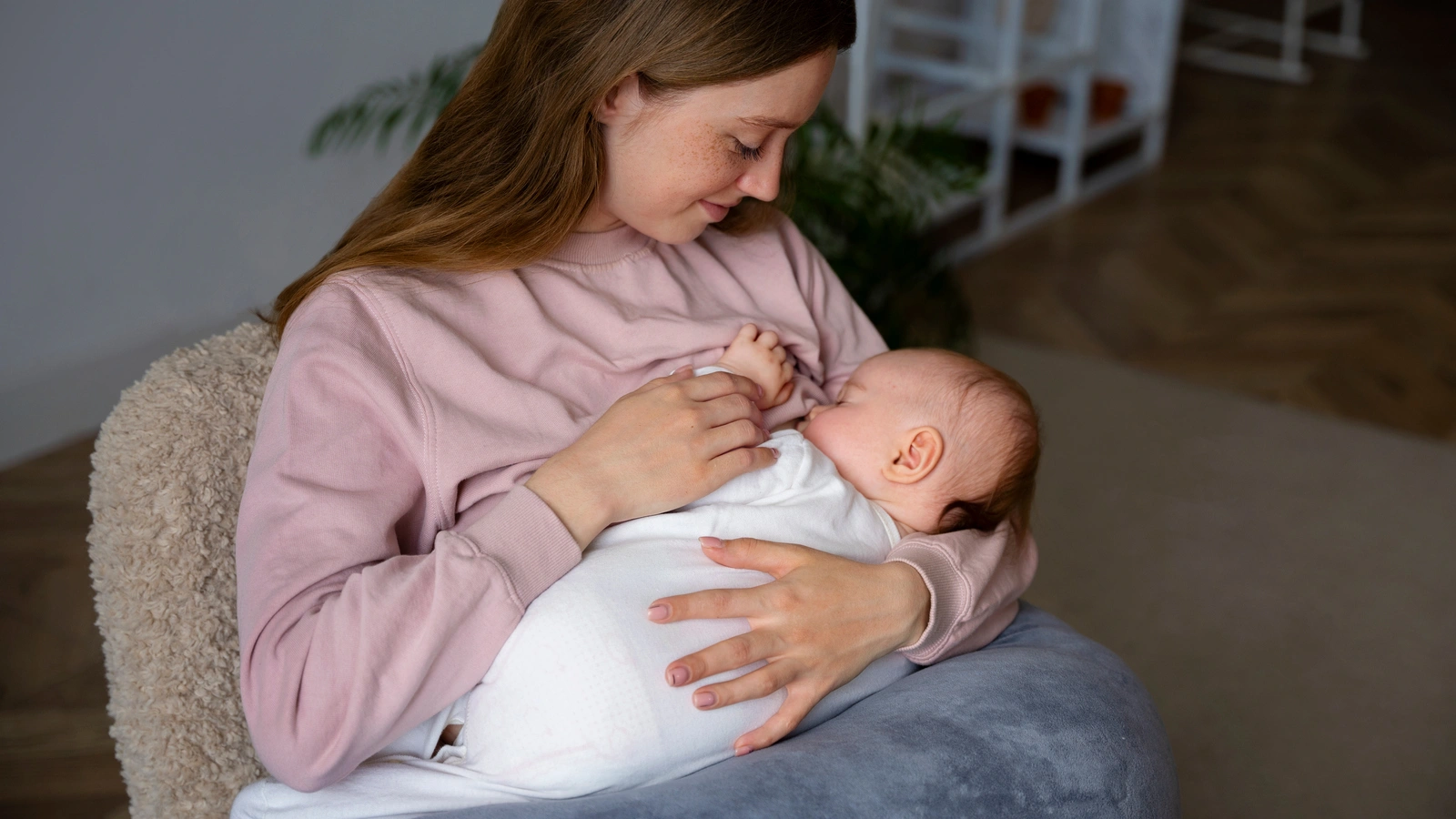
Babies sweating while breastfeeding is generally normal, especially when your little one feels warm, is actively feeding, or is in skin-to-skin contact with Mom.
Seeing your little one sweat while breastfeeding is quite common. This can happen because the baby’s body produces heat during feeding or because the surrounding temperature is too warm.
Even so, Moms should pay attention to the baby’s overall condition. Occasional sweating without other symptoms is usually nothing to worry about, while excessive sweating accompanied by feeding difficulties requires further attention.
Is It Normal for Babies to Sweat While Breastfeeding?
Yes, babies sweating while breastfeeding can be normal. Breastfeeding requires coordination between sucking, swallowing, and breathing, making it an activity that requires energy from your little one.
In addition, your baby’s head and body are usually close to your body while breastfeeding. This contact can make the baby’s head, neck, or back feel warmer, making it easier for sweat to appear.
However, if your little one sweats heavily every time they breastfeed and appears easily tired, breathes rapidly, stops feeding before becoming full, or has difficulty gaining weight, Moms should consult a doctor. These symptoms may indicate an underlying health condition that needs attention.
Read Also: 5 Natural Ways to Remove Breast Milk Stains from Baby’s Cheeks! Moms Need to Know
Causes of Babies Sweating While Breastfeeding
Several conditions can cause a baby to sweat while breastfeeding, ranging from the physical activity of feeding to an overly warm environment.
1. Breastfeeding Is a Physical Activity for Babies
Breastfeeding requires the use of several muscle groups, particularly the muscles around the mouth, jaw, and tongue. Your little one also needs to repeatedly coordinate sucking, swallowing, and breathing during feeding.
These activities require energy and generate body heat. Therefore, a small amount of sweat around the head or face during breastfeeding can occur and does not necessarily indicate a health problem.
2. Increased Heart Rate
While breastfeeding, your little one’s body works more actively than when resting, so their heart rate may increase. This is normal as long as it is not accompanied by symptoms such as an unusually rapid heartbeat, labored breathing, or frequent pauses during feeding to catch their breath.
If a rapid heart rate occurs together with excessive sweating, rapid breathing, or easy fatigue during breastfeeding, Moms should consult a doctor.
3. Skin-to-Skin Contact with Mom
Direct skin-to-skin contact between Mom and baby can cause their body temperatures to influence each other. Heat from Mom’s body can transfer to the baby through skin-to-skin contact, especially when the baby remains close for an extended period.
As a result, the baby’s head, neck, and back may feel warmer, particularly when skin-to-skin contact lasts for a long time or takes place in a room that is not very cool. Make sure your little one does not become overheated and watch for signs such as a very warm body or excessive sweating.
4. The Room Temperature Is Too Warm
A room that is too warm can make it harder for babies to release heat, especially when the temperature is above 24°C. During breastfeeding, your little one’s body also produces heat from actively sucking and being close to Mom, making them more likely to sweat.
Moms can check the baby’s chest or back to determine whether their body feels too warm. If your baby is sweating or their chest feels hot, try moving them to a cooler room and make sure they are not wearing overly thick clothing.
5. Your Little One Is Wearing Clothing That Is Too Thick
Clothing that is too thick can trap body heat around your little one’s skin, especially while breastfeeding. Fleece, wool, or layered clothing can make the body warmer and restrict airflow, making babies more likely to sweat.
As a general guideline, babies typically do not need more than one additional layer of clothing compared with adults in the same environment. Choose lightweight, comfortable, and breathable clothing, and avoid excessive blankets or clothing layers while your little one is breastfeeding.
6. Certain Medical Conditions
In some cases, excessive sweating while breastfeeding can be a sign of an underlying medical condition. One example is congenital heart disease, which can cause babies to become tired more easily because their bodies require more energy to breathe and feed.
Moms should be more alert if sweating occurs along with rapid breathing, difficulty breathing, difficulty breastfeeding, easy fatigue, bluish lips or skin, or poor weight gain. If these symptoms occur, consult a doctor promptly.
How to Manage a Baby Who Sweats While Breastfeeding
If the sweating occurs because your little one feels too warm, several simple steps can help make them more comfortable. The main goal is to keep the baby’s body temperature comfortable without making them too cold.
1. Make Sure Your Baby Wears Loose, Breathable Clothing
Choose lightweight, soft, and breathable cotton clothing, such as bodysuits, short-sleeved shirts, or pajamas. Avoid clothing that is too tight or too many layers, as these can trap body heat.
Moms can choose clothing for your little one according to the room temperature to help prevent overheating. If the weather is warm, lightweight, breathable clothing is usually sufficient without adding too many layers.
2. Pay Attention to the Room Temperature
Make sure the room where Moms breastfeed has good airflow and a temperature of around 22–24°C to keep your little one comfortable. If your baby is sweating, check their chest or back to make sure their body does not feel too warm.
There is no need to make the room too cold while breastfeeding. A temperature of 22–24°C is generally comfortable, especially when your baby is wearing lightweight clothing without excessive layers.
3. Avoid Holding Your Baby Too Tightly or for Too Long
While breastfeeding, your little one naturally stays close to Mom. However, holding your baby too tightly or for an extended period can trap heat between your bodies.
Leave enough space for air to circulate around your little one’s body. After breastfeeding, Moms can also adjust the baby’s clothing or position if their body feels too warm.
Read Also: Moms, Here’s How to Make Breast Milk Richer for Your Little One
Conclusion
Babies sweating while breastfeeding is generally normal, especially when the sweating is mild and your little one remains active, feeds well, and shows no other symptoms. Breastfeeding activity, skin-to-skin contact, room temperature, and overly thick clothing can all make babies more likely to sweat.
To help your little one stay comfortable while breastfeeding, make sure the room is not too warm, choose lightweight and breathable clothing, and avoid excessive layers. Moms can also support their little one’s comfort with MAKUKU Slim Luxury Silky, which features SAP (Super Absorbent Polymer) technology to absorb liquid quickly and help keep the diaper surface dry, allowing your little one to breastfeed and stay active more comfortably.
FAQ
1. Does a baby sweating while breastfeeding mean they are not getting enough breast milk?
If a baby is not getting enough breast milk, signs may include infrequent urination, difficulty gaining weight, remaining hungry after feeding, or appearing lethargic.
2. Does a baby sweat while breastfeeding because they are too hot?
Yes, babies who are too hot may sweat while breastfeeding. Moms can adjust the room temperature and make sure their little one is not wearing overly thick clothing.
3. When should a baby sweating while breastfeeding be checked by a doctor?
Moms should consult a doctor if excessive sweating occurs almost every time the baby breastfeeds, especially when accompanied by rapid breathing, difficulty breathing, easy fatigue, difficulty feeding, poor weight gain, or bluish lips or skin.