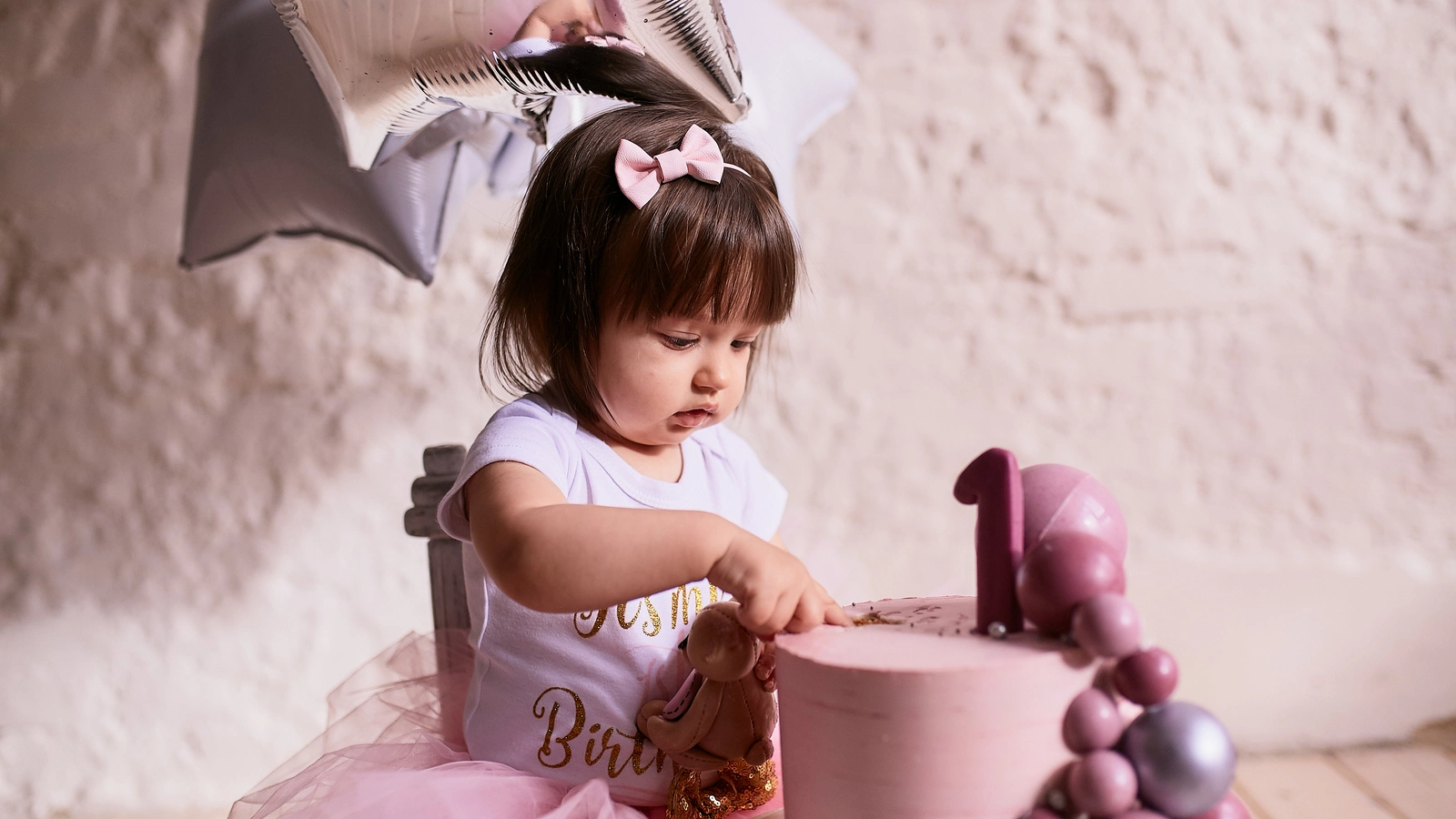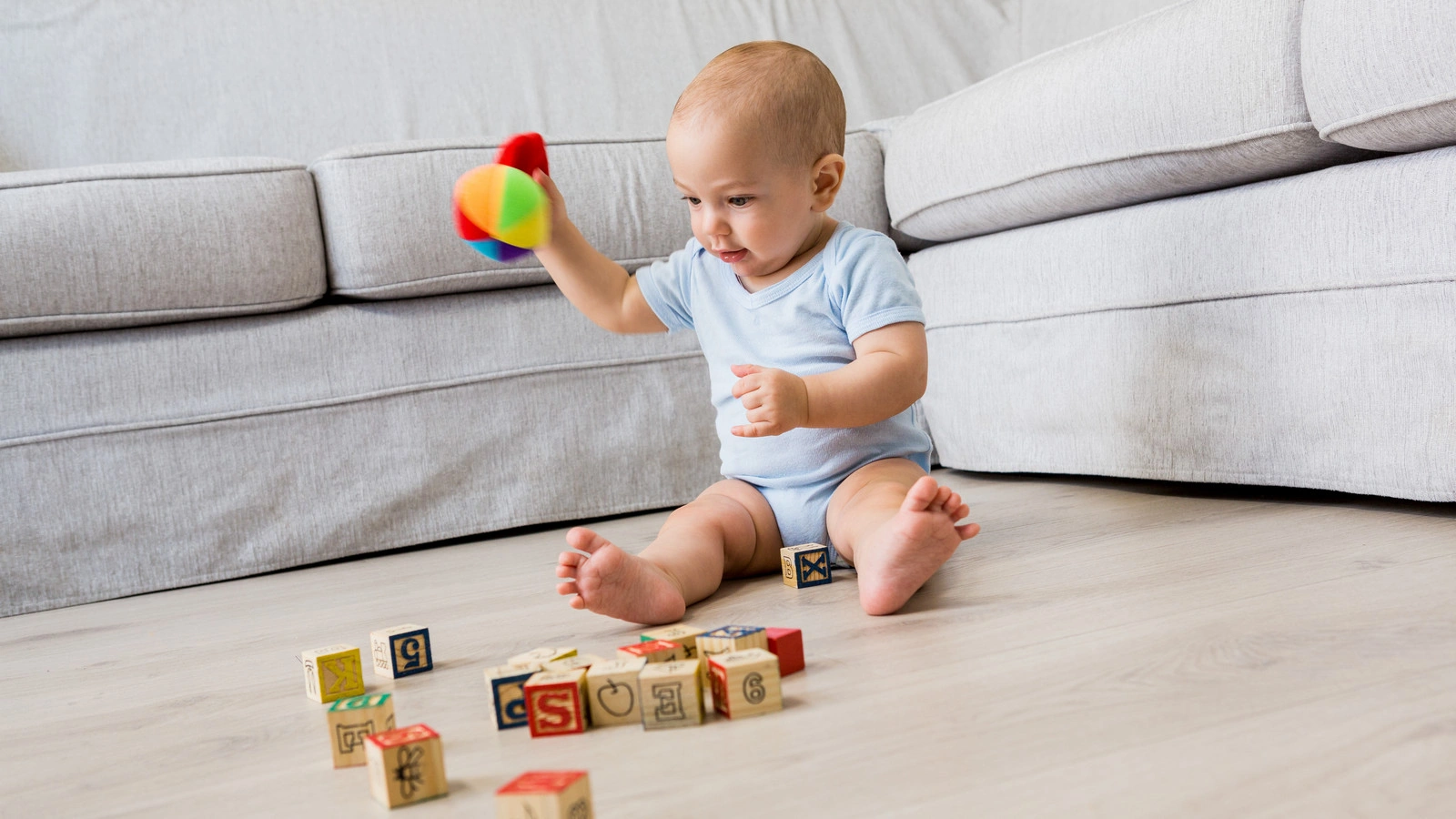
Educational toys for 1-year-olds can help little ones learn through play while supporting their motor, cognitive, language, social, and coordination skills. Moms can choose toys according to their child's developmental stage while paying attention to safety, size, materials, and how the toys are used.
That is why play is more than just a way to pass the time. Educational toys for 1-year-olds can provide opportunities for your little one to learn about shapes, colors, sounds, and movements while developing various skills through enjoyable activities.
Benefits of Toys for 1-Year-Olds' Development
At 1 year old, your little one becomes increasingly active in exploring their surroundings and learning through various activities. Playing with age-appropriate toys can be a fun way to support their growth and development and offers several benefits:
- Developing gross motor skills: Toys that encourage your little one to walk, push, pull, or move around can help develop coordination and physical strength.
- Developing fine motor skills: Activities such as stacking blocks, putting objects into containers, or pressing buttons can improve hand-eye coordination and finger skills.
- Developing cognitive skills: Play can also help your little one practice thinking, concentration, and simple problem-solving skills. Activities such as stacking blocks or matching shapes can provide enjoyable stimulation to support brain development.
- Supporting language development: Playing with Moms can be an opportunity to introduce new vocabulary. Moms can talk to their little one, name objects, or imitate sounds while playing.
- Improving social and emotional skills: Playing together helps your little one learn to interact with others, follow simple instructions, express emotions, and enjoy activities with other people.
Toys do not have to be expensive or have many features to be beneficial. What matters most is choosing toys that match your little one's age, abilities, and interests, then accompanying them during play to make the activity more enjoyable and meaningful.
List of Educational Toys for 1-Year-Olds
There are many educational toy options for 1-year-olds that can support learning through play. Here are some options Moms can consider.
1. Stacking Rings
Stacking rings consist of several rings in different sizes or colors that can be placed onto a central post. This simple activity can help your little one practice grasping, picking up, and placing objects.
Stacking the rings also helps develop hand-eye coordination. Moms can introduce colors or different sizes while playing with their little one.
2. Puzzles
Simple puzzles with large pieces can help introduce shapes and develop problem-solving skills. Your little one learns to find the piece that fits into the available space.
For 1-year-olds, choose puzzles with 2 to 4 large pieces and easy-to-grip handles. Avoid puzzles with small pieces that could be placed in the mouth.
3. Busy Jars
Busy jars are containers or toys that feature various simple activities, such as opening, closing, putting objects in, or taking them out. These activities can encourage your little one to explore how objects work.
This type of toy can help develop hand-eye coordination and fine motor skills. Make sure every component is large enough and cannot easily come loose.
4. Fishing Toys
Fishing toys usually consist of toy fish and a fishing rod with magnets or a simple mechanism. Your little one can practice directing their hands to pick up the fish they want.
This activity develops hand-eye coordination while introducing concepts such as colors and numbers. Choose a model specifically designed for 1-year-olds and avoid toys with small accessories.
5. Pop It
Pop It toys have a surface made of silicone bubbles that can be pressed repeatedly. Pressing the bubbles can help develop finger movements and hand coordination.
Moms can also use the toy to introduce colors or encourage their little one to follow simple instructions. Make sure the Pop It is made from safe materials and does not have small parts that can easily come loose.
6. Crawl Tunnel
A crawl tunnel is a play tunnel that your little one can crawl through. This toy encourages movement and exploration.
The activity can help develop body coordination, balance, and gross motor skills. Use it in a spacious and safe area without hard objects or sharp corners around the tunnel.
7. Mini Shopping Cart
A mini shopping cart can be used to push objects while walking. This toy can appeal to little ones who are beginning to stand and walk.
Pushing the cart can also help develop movement coordination and balance. Make sure the wheels are not too slippery and the handle is sturdy so the toy does not tip over easily.
8. Learning Table
Learning tables typically feature various activities such as buttons, wheels, levers, shapes, or sounds. These activities give your little one opportunities to explore the relationship between actions and responses.
This toy can help develop fine motor skills, hand-eye coordination, and an understanding of cause and effect. Choose a product that is appropriate for your little one's age range.
9. Board Books
Board books have thick pages that are more difficult to tear than regular paper books. They are suitable for introducing pictures, colors, sounds, and simple vocabulary.
Moms can read stories while pointing to pictures and naming objects. This interaction helps introduce language while building early reading habits.
10. Board Games
For 1-year-olds, choose board games that are very simple and do not involve complex rules. Activities can include matching pictures, placing large pieces into slots, or taking turns with Moms.
These activities can provide opportunities to introduce simple concepts such as colors, shapes, and taking turns. Make sure all components are large and appropriate for the child's age.
11. Building Blocks
Large building blocks can be used for stacking, building, or knocking down simple structures. These activities help develop hand-eye coordination and fine motor skills.
Moms can also encourage their little one to count or identify the colors of the blocks. Choose blocks that are large enough to prevent them from being swallowed.
12. Flash Cards
Flash cards can be used to introduce pictures of animals, objects, colors, or body parts. At 1 year old, they should be used through simple interaction rather than asking your little one to memorize the cards.
Moms can show one card while naming the object on it. This approach helps build vocabulary and develop the ability to recognize objects.
13. Dolls
Dolls can be playmates as well as tools for introducing everyday activities. Moms can encourage their little one to pretend to feed the doll, put it to sleep, or brush its hair.
Simple pretend play can support social and emotional development. Choose dolls without eyes, buttons, or small accessories that could easily come loose.
14. Pretend-Play Sets
Pretend-play sets can introduce your little one to different professions through imaginative play. Examples include doctor, chef, firefighter, or toy tool sets.
Moms can join in the activity while naming objects and explaining what they are used for. This activity helps develop vocabulary, imagination, and social skills.
15. Rubber Balls
Large rubber balls can be used for activities such as rolling, throwing, or kicking. These games help develop body coordination and gross motor skills.
Moms can sit facing their little one and take turns rolling the ball back and forth. Choose a ball that is large enough that it cannot fit into your child's mouth.
16. Magnetic Tiles
Magnetic tiles can usually be stacked and connected using magnets. Building activities can help introduce shapes while developing hand-eye coordination.
However, Moms need to pay close attention to toy safety. Avoid products with small detachable magnets because swallowed magnets can cause serious injuries to the digestive tract.
17. Shape Sorters
A shape sorter has openings in different shapes and pieces that need to be placed into the corresponding openings. This toy helps your little one recognize different shapes while developing hand-eye coordination.
Moms can help by offering one piece at a time and showing the corresponding opening. Choose a shape sorter with large, sturdy pieces.
18. Toy Musical Instruments
Toy musical instruments such as drums, maracas, or simple pianos allow your little one to create sounds through their own movements. This activity introduces the relationship between actions and sounds.
Playing music can also be an opportunity to introduce rhythm and develop coordination. Choose instruments that are not excessively loud to keep them comfortable for your little one's hearing.
19. Playdoh
Playdoh can be used for squeezing, pressing, and shaping simple objects. These activities can help develop finger strength and hand coordination.
However, Moms should choose products that are specifically appropriate for your little one's age and always supervise them during play. At 1 year old, children still tend to put objects in their mouths, so Playdoh should not be eaten.
20. Push Walker
A push walker is a toy that can be pushed while walking. It can give your little one an opportunity to practice walking and stay active.
Choose a push walker that is sturdy, has controlled wheel movement, and is not easy to tip over. Moms should still supervise their little one, as this toy is not a substitute for supervision while learning to walk.
How to Choose Safe Educational Toys for 1-Year-Olds
Choosing educational toys for 1-year-olds is not only about finding toys with attractive shapes or colors. Moms should also consider the following factors to ensure the toys are appropriate and safe for your little one:
- Choose toys based on your little one's age and abilities. Check the age recommendation on the packaging and choose toys that match your child's developmental stage.
- Avoid small parts that can easily come loose. One-year-olds often explore objects by putting them in their mouths, so small parts can increase the risk of choking.
- Choose safe and durable materials. Make sure toys are not easily broken, cracked, or damaged in a way that could create sharp edges. For battery-operated toys, make sure the battery compartment is securely closed and cannot be easily opened by your little one.
- Check toys regularly. Remove any toy from use if it becomes cracked, damaged, broken, or has loose parts, as these can pose a safety risk during play.
- Always supervise your little one during play. Direct supervision helps Moms ensure that playtime remains safe and allows you to respond quickly if an unexpected situation occurs.
By choosing appropriate toys and supervising your little one during play, Moms can create enjoyable activities that also support their growth and development.
Conclusion
There are many educational toy options for 1-year-olds that can help your little one learn through play. From puzzles, building blocks, and shape sorters to board books, balls, and push walkers, each toy can provide different types of stimulation.
Moms do not need to provide all types of toys at once. Choose a few toys that match your little one's abilities and interests, then accompany them as they explore to make playtime more enjoyable.
As your little one becomes more active during play and movement, comfort is also important so they can explore more freely. MAKUKU Slim Luxury Silky features SAP Thin Core Technology, which makes the diaper as thin as 1.6 mm for comfortable wear, along with Natural Fine Silk fibers that feel soft against the skin. Its high absorbency also helps keep your little one dry for up to 12 hours, allowing Moms to feel more comfortable while supporting their little one's active playtime.
FAQ
1. Do 1-year-olds need educational toys?
Educational toys can be one of the tools that help your little one explore and develop various skills. However, direct interaction with Moms is also important in supporting a child's learning process.
2. How many toys should a 1-year-old have?
There is no specific number of toys a child must have. Moms can provide several toys with different functions and rotate them so your little one stays interested without having too many toys available at once.
3. What toys should be avoided for 1-year-olds?
Avoid toys with small parts that can easily come loose, sharp edges, long strings, or small magnets that could be swallowed. Always check the age recommendation on the packaging and supervise your little one during play.