Baby developmental milestones from 0–12 months include various motor, communication, cognitive, and social skills, from lifting the head to attempting to walk. Every baby may reach milestones at a different time, so stimulation should be introduced gradually without forcing the baby to develop a particular skill.
Every month, your little one will develop new skills as part of their growth and development. From learning to control their head, rolling over, and sitting to trying to stand and saying simple words, each skill develops gradually according to their age and physical readiness.
Understanding baby developmental milestones from 0–12 months can help Moms recognize the skills that generally begin to emerge at each stage. This allows Moms to provide appropriate stimulation while observing their little one's development without comparing them with other babies.
Baby Developmental Milestones at 0–3 Months
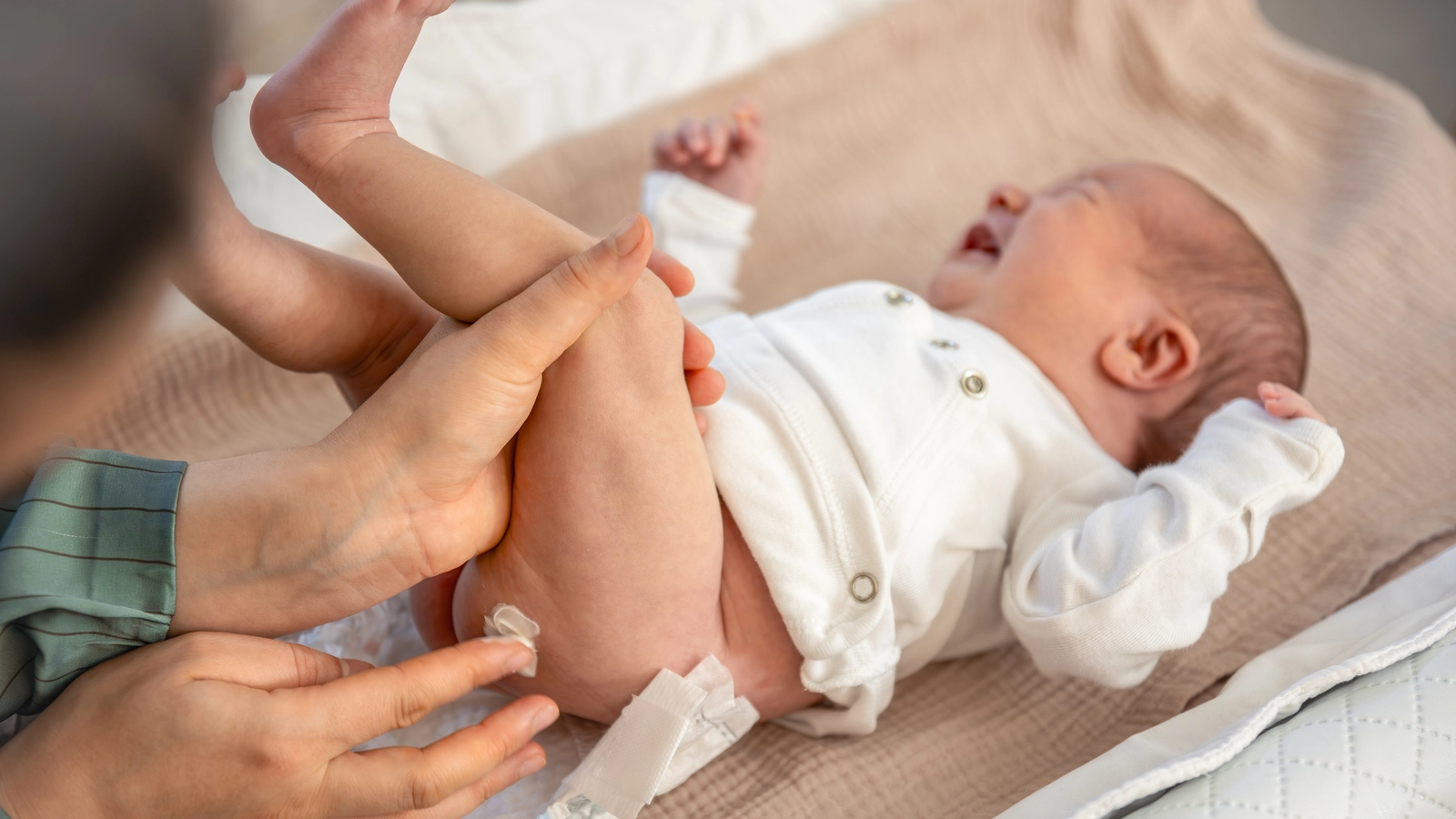
At 0–3 months, your little one begins adapting to their surroundings and learning to control their body movements. Development during this stage can be seen through motor skills, responses to sounds, and simple interactions with people close to them.
1. Lifting and Beginning to Control the Head
At birth, babies are not yet able to control their heads well and still need support. As they grow, their neck and upper-body muscles become stronger.
At around 2–3 months, babies generally begin to lift their heads while lying on their stomachs and gradually become able to maintain a more stable head position.
2. Moving the Arms and Legs and Showing Natural Reflexes
Babies begin moving their arms and legs more frequently and spontaneously. At this stage, some movements are also influenced by the natural reflexes babies are born with.
Moms may notice their little one clenching their fists, moving their legs, or making reflexive movements when they hear a sound or receive a touch.
3. Following Faces or Objects with Their Eyes
Baby vision develops gradually after birth. Your little one begins to show interest in the faces of people around them and may follow slowly moving objects with their eyes.
Moms can bring their face or an object closer at an appropriate distance and move it slowly to encourage your little one to explore visually.
4. Responding to Sounds and Recognizing Parents' Voices
Babies begin responding to sounds from an early age. Familiar voices, especially the voice of Moms or someone who frequently cares for them, may help your little one feel calmer or pay attention to the source of the sound.
Talk to your little one from a close distance using a gentle voice to help build interaction.
5. Smiling, Laughing, and Beginning to Make Sounds
During the early months, babies begin smiling as part of their social development. As they grow, your little one also begins making sounds such as cooing and reacting to interactions with others.
These responses are part of early communication development before babies begin saying words.
6. Recognizing Familiar Scents and Touch
Babies can recognize familiar scents and voices. Gentle touch and activities such as holding your baby can also become part of the bonding process between your little one and their parents.
Moms can use moments such as breastfeeding, holding, or cuddling to build an emotional connection with their little one.
Baby Developmental Milestones at 4–6 Months
At 4–6 months, your baby's body control and coordination skills continue to develop. Your little one begins moving more actively, reaching for objects, and interacting with their surroundings.
1. Rolling from Back to Tummy and Vice Versa
Babies begin learning to use their neck, back, abdominal, and arm muscles to change body positions. One of the skills that may begin to emerge is rolling from their back to their tummy or vice versa.
Not all babies master both directions at the same time. Give your little one opportunities to practice on a safe surface that is not too soft.
2. Supporting the Body with Their Hands During Tummy Time
During tummy time, your little one may begin supporting their body with both hands. This position helps strengthen the upper-body muscles needed for various movements that follow.
Moms can place an interesting toy in front of the baby to encourage them to lift their head and support their body.
3. Beginning to Sit with Support or Briefly Without Support
At this stage, some babies begin learning to maintain a sitting position with support. As their body control develops, your little one may gradually be able to sit without support for longer periods.
Moms do not need to force babies to sit before their bodies are ready. Make sure practice takes place in a safe environment and always supervise your little one.
4. Reaching, Grasping, and Transferring Objects
Hand-eye coordination continues to develop. Your little one begins reaching for objects that catch their attention, grasping them, and transferring them from one hand to the other.
This ability helps babies understand the relationship between their body movements and the objects around them.
5. Exploring Objects by Putting Them in Their Mouth
Putting objects in their mouth is one way babies explore their surroundings. At this age, your little one begins learning about objects through different senses, including touch and taste.
Therefore, make sure objects within the baby's reach are large enough, do not have small detachable parts, and are safe for babies.
6. Babbling and Imitating Sounds or Expressions
Babies begin making more sounds and reacting to other people's voices. Your little one may also begin imitating simple expressions such as smiling.
Moms can respond to their baby's babbling by talking, singing, or imitating their sounds to create a simple conversation.
7. Recognizing Familiar People and Responding When Called
Your little one begins recognizing the faces of people who are frequently around them. Babies may also pay attention when their name is called or when they hear a familiar voice.
Every baby's response can be different, so Moms do not need to expect the same response every time.
Baby Developmental Milestones at 7–9 Months
At 7–9 months, babies usually become increasingly active in exploring their surroundings. Their abilities to sit, move, grasp objects, and communicate also continue to develop.
1. Sitting Independently with Greater Stability
After previously learning to sit with support, your little one begins to maintain a sitting position independently with greater stability.
This ability gives babies a wider view of their surroundings, allowing them to see and reach for nearby objects.
2. Beginning to Crawl or Move Around
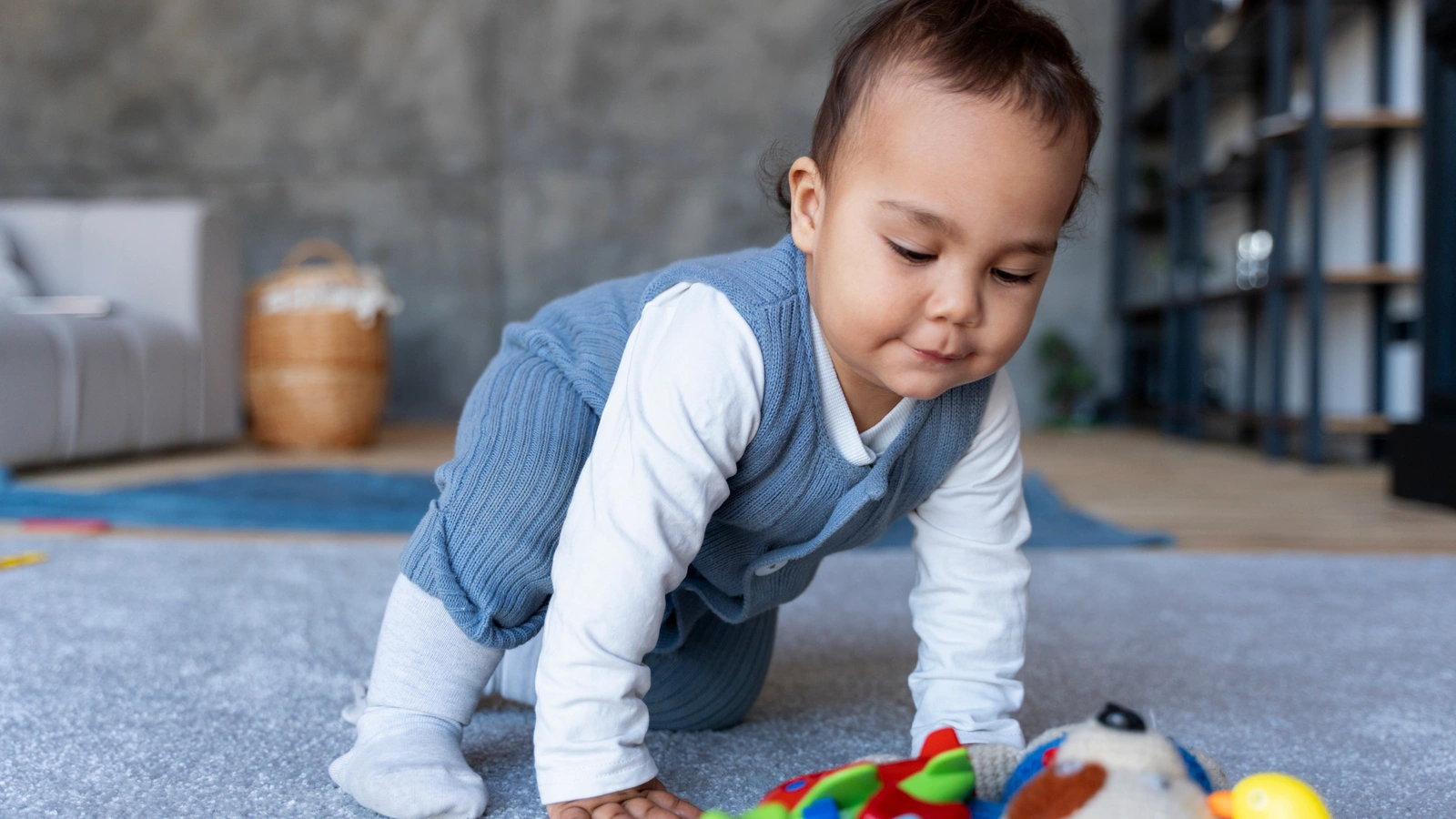
Babies begin discovering different ways to move from one place to another. Some babies crawl on their hands and knees, while others may move differently, such as scooting or creeping.
Not all babies crawl in the same way, and some babies may even skip the crawling stage before learning to walk.
3. Supporting Their Body to Try Standing
Your little one begins using their hands to hold onto sturdy objects and tries to pull themselves up. This movement helps strengthen their legs and improve body coordination.
Moms can provide a safe area and sturdy objects for your little one to hold onto, while continuing to supervise them during exploration.
4. Holding Two Objects and Banging Them Together
A baby's hand coordination continues to develop, allowing your little one to hold objects with both hands. They may begin banging two objects together to produce sounds.
This simple activity also shows your baby's curiosity about the relationship between an action and its result.
5. Looking for Hidden Objects
Babies begin understanding that an object continues to exist even when it cannot be seen. Therefore, your little one may look for a toy that is partially hidden.
Games such as peekaboo can be a simple and enjoyable way to practice this ability.
6. Babbling with Combinations of Syllables
Baby babbling begins to sound more varied and may include combinations of sounds such as “ba-ba” or “ma-ma.” Your little one also begins reacting when spoken to.
Moms can continue talking to their baby to enrich their early language experiences.
7. Showing Interest in or Anxiety Around Other People
Babies begin distinguishing between familiar people and those they rarely encounter. As a result, your little one may appear more comfortable around Moms or a familiar caregiver.
On the other hand, babies may become more cautious or anxious when meeting new people. This response can be part of normal social and emotional development.
Baby Developmental Milestones at 10–12 Months
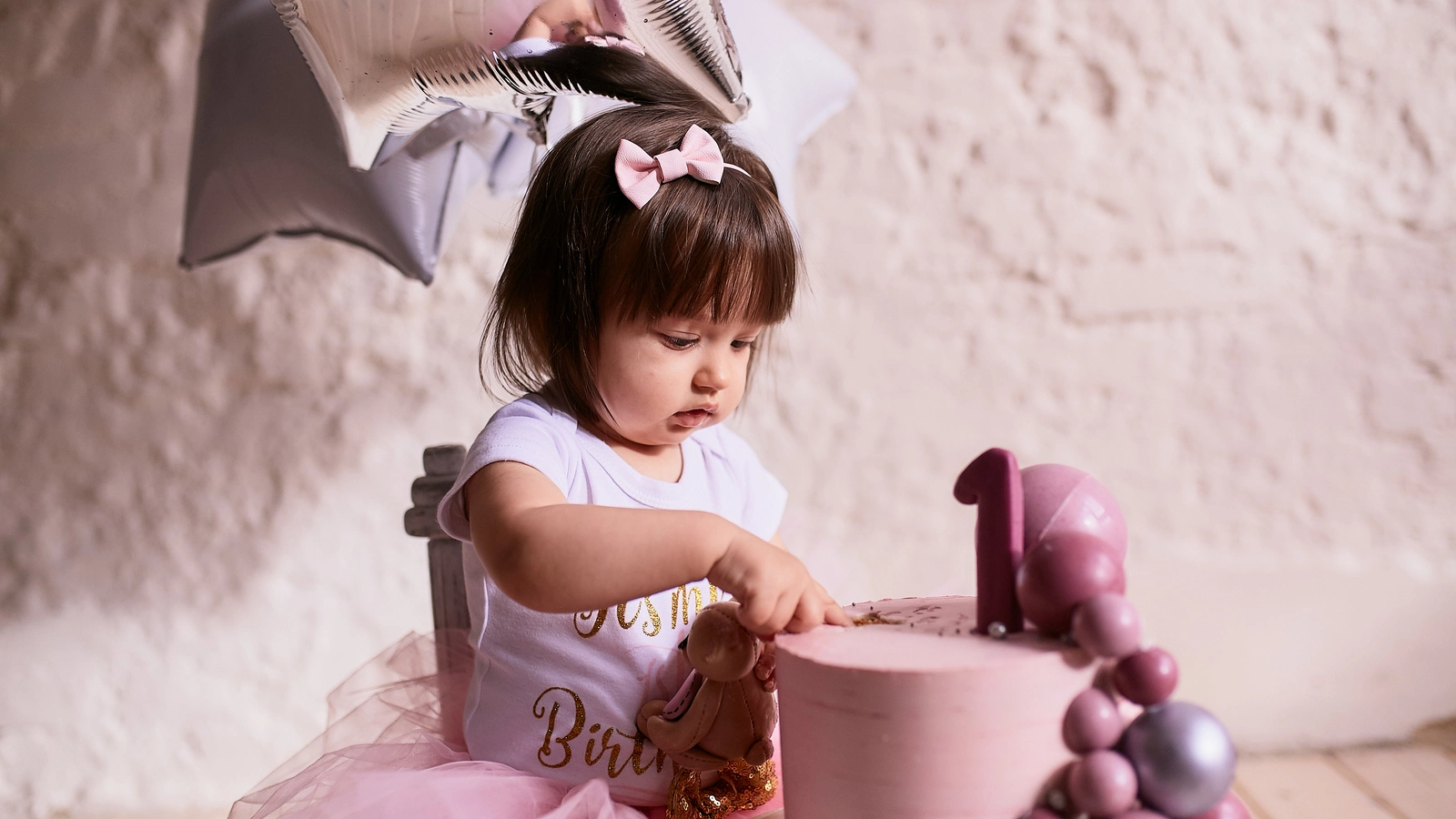
As they approach their first birthday, your little one becomes increasingly active in using their body and communicating. Some babies begin showing the ability to stand and walk, while others may still be practicing these skills.
1. Standing While Holding On and Beginning to Cruise
Babies may begin pulling themselves up to stand while holding onto a sturdy object. Once they become more stable, your little one may start cruising while holding onto furniture.
Make sure the play area is free from sharp objects, cables, hot items, or objects that can easily fall.
2. Standing Independently or Trying Their First Steps
Some babies may begin standing independently or taking a few steps during this period. However, the timing of when walking skills emerge varies considerably from one child to another.
Moms do not need to compare their little one with other babies. Provide a safe space for them to practice according to their abilities and physical readiness.
3. Picking Up Small Objects with the Thumb and Index Finger
Finger coordination continues to improve, allowing your little one to pick up small objects using their thumb and index finger. This ability is known as the pincer grasp.
Moms still need to be careful because the ability to pick up small objects also increases the risk of those objects being put into the baby's mouth. Keep small objects and items that pose a choking hazard out of your baby's reach.
4. Pointing, Waving, and Clapping
Simple movements such as pointing, waving, and clapping begin to emerge as part of communication and social development.
Your little one may use these gestures to express what they want, attract attention, or imitate people around them.
5. Understanding Simple Instructions
Babies begin understanding some words and simple instructions that are frequently used in everyday situations. For example, your little one may respond when Moms says “no” or asks them to perform a simple movement.
Use short, clear sentences while showing the movement or object being referred to.
6. Imitating Movements and Using Objects for Their Intended Purpose
Your little one begins imitating activities performed by people around them. They may also begin understanding the purpose of objects, such as trying to use a comb to brush their hair or holding a toy phone like an adult.
Moms can provide examples through everyday activities that are safe for babies to imitate.
7. Saying Simple Words with Meaning
As they approach their first birthday, some babies begin saying one or several simple words with meaning. However, speech development can progress at different rates for each baby.
Continue talking to your little one and respond to every babble or attempt at communication to support their language development.
How to Stimulate Baby Development According to Each Stage
Stimulation helps your little one learn through activities that match their age and abilities. Moms do not need to provide complicated exercises because everyday interactions can also become opportunities to stimulate your baby's development.
1. Do Tummy Time Regularly and Gradually
Tummy time helps babies strengthen their neck, shoulders, arms, and upper-body muscles. Do it while your little one is awake and continue supervising them throughout the activity.
As a form of stimulation, tummy time can begin with short sessions and gradually increase according to the baby's abilities and comfort. Moms can interact with their little one by talking, smiling, or placing a toy in front of them to encourage them to lift their head and move.
2. Talk, Sing, and Make Eye Contact with Your Baby
Talking and singing can provide language stimulation while strengthening bonding. During interactions, make eye contact and respond to your little one's sounds and expressions.
There is no need to use complicated words. Simple conversations while changing diapers, bathing, or breastfeeding can also provide stimulation.
3. Provide Colorful, Noisy, and Textured Toys
Toys with different shapes, textures, or sounds can help your little one explore different senses. Choose toys that are appropriate for their age and do not have small parts that can easily come loose.
Make sure toys are always clean and free from damaged parts.
4. Encourage Your Baby to Reach for and Move Toys
Place a safe toy within your little one's reach and let them try to grab it. As their hand skills develop, Moms can encourage them to transfer the toy from one hand to the other.
This simple activity helps develop hand-eye coordination.
5. Read Picture Books and Play Peekaboo
Books with simple pictures can be a way to introduce different objects and words to babies. Moms can point to pictures while saying their names clearly.
Peekaboo can also be a fun activity to help babies understand that an object or person still exists even when they are temporarily out of sight.
6. Provide a Safe Area for Sitting, Crawling, and Standing
As babies become more active, make sure their play area is free from objects that could hurt them or fall. Block access to stairs, electrical outlets, and other areas that may be dangerous for babies.
Moms can also remove small objects that could be swallowed or cause choking.
7. Give Your Baby Opportunities to Explore Without Forcing Their Abilities
Every baby has a different developmental rhythm. Therefore, give your little one opportunities to try new skills without forcing them to reach certain milestones before they are ready.
Moms can observe their development and consult a doctor if they have concerns about their little one's abilities or milestones.
Support Your Little One's Freedom to Move at Every Stage with MAKUKU Pro Care
Baby development from 0–12 months progresses gradually, from learning to control the head, rolling over, and sitting to crawling, standing, and walking. Every baby has a different developmental rhythm, so stimulation should be provided according to your little one's age, abilities, and readiness without forcing them to reach specific milestones.
In addition to providing stimulation through play and everyday interactions, Moms also need to make sure their little one remains comfortable during their various activities. One way to do this is by choosing a diaper that supports skin comfort and helps keep your little one dry, such as MAKUKU Pro Care, which is equipped with SAP Thin Core Technology to help absorb and lock in liquid quickly while featuring a soft layer that is gentle on baby's skin.
With this protection, MAKUKU Pro Care can be an option for keeping your little one comfortable while staying active and exploring throughout the day.
FAQ
1. When do babies start sitting independently?
Many babies begin learning to sit without assistance at around 6–9 months, but the timing can vary from one baby to another. The important thing is that your little one is gradually developing their motor skills.
2. When do babies start crawling?
Babies generally begin trying to move around by crawling at around 7–10 months. However, not all babies crawl in the same way, and some babies may skip the crawling stage.
3. When do babies start walking?
Some babies begin taking their first steps around their first birthday, but the developmental range for walking is quite broad. Moms should look at your little one's overall motor development rather than simply comparing the age at which they start walking with other babies.