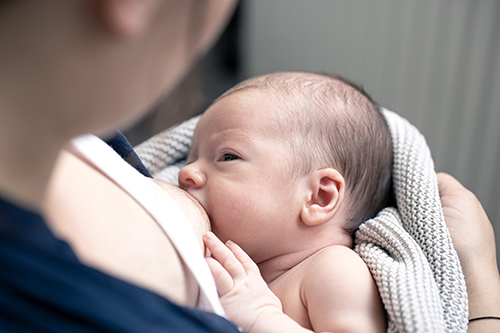
A newborn's breast milk needs gradually increase, starting from around 2–10 mL per feeding on the first day to 45–60 mL on the seventh day and approximately 80–150 mL by 1 month of age.
Breast milk is the primary source of nutrition for newborns. During the first few days, babies naturally drink only small amounts because their stomachs are still small. As they grow, their breast milk needs and stomach capacity gradually increase.
However, a newborn's breast milk intake should not be assessed based solely on the amount in mL. Feeding frequency, the number of wet and soiled diapers, the baby's ability to swallow, and weight gain should also be considered to determine whether the baby is getting enough breast milk.
How Much Breast Milk Does a Newborn Need?
A newborn's breast milk needs gradually increase during the first week. At first, babies only need a few mL of colostrum at each feeding. This amount then increases as milk production increases and the baby's stomach capacity develops.
The following are typical ranges for the amount of breast milk consumed by healthy, full-term babies during the early stages of life:
| Baby's Age | Breast Milk per Feeding |
|---|---|
| Day 1 | 2–10 mL |
| Day 2 | 5–15 mL |
| Day 3 | 15–30 mL |
| Day 7 | approximately 45–60 mL |
| 1 month old | approximately 80–150 mL |
These figures are ranges, not targets that babies must finish at every feeding. Each baby's needs may vary depending on their weight, feeding frequency, and health condition.
During the first few days, a baby's stomach capacity is still small, so the amount of breast milk they consume is also small. As the baby grows, the amount of breast milk consumed per feeding will increase.
The mL range is more useful when Moms are giving expressed breast milk. If your baby breastfeeds directly, the exact amount of milk consumed cannot be determined, so there is no need to force your baby to meet a specific mL target.
How Many Times Should a Newborn Breastfeed Per Day?
Newborns generally need to breastfeed 8–12 times within 24 hours. This means your baby may breastfeed approximately every 2–3 hours, although the timing does not always have to be the same.
There may be times when your baby wants to breastfeed more frequently, especially during cluster feeding. Therefore, Moms should pay attention to the baby's hunger cues rather than relying solely on a schedule.
Hunger cues may include opening their mouth, moving their head toward the breast, putting their hands in their mouth, or becoming more active. Crying is usually a later sign of hunger.
During the first few days, babies may also be sleepier. If your baby is difficult to wake for feeding or breastfeeds much less frequently than usual, Moms should consult a doctor or healthcare professional.
How to Calculate Breast Milk Needs for a Newborn
For babies who breastfeed directly, breast milk needs should not be calculated solely based on the amount in mL because the amount consumed can vary from one feeding to another.
If Moms are giving expressed breast milk, a baby's daily fluid needs can be estimated based on body weight. After the first few days, the fluid needs of a full-term baby may be around 150 mL/kg of body weight per day, although individual needs may vary.
For example, if your baby weighs 3 kg:
3 kg × 150 mL = 450 mL per day
If the baby breastfeeds or receives expressed breast milk 10 times a day:
450 mL ÷ 10 = approximately 45 mL per feeding
This calculation is only an example to help Moms understand how to estimate breast milk needs. Do not force your baby to finish this amount at every feeding because their needs may vary from one feeding to another.
For babies who breastfeed directly, indicators such as wet diapers, changes in stool, audible swallowing, appearing satisfied after feeding, and weight gain are more useful for assessing whether they are getting enough breast milk.
Signs Your Baby Is Getting Enough Breast Milk
Moms may wonder whether their baby is getting enough breast milk. In addition to looking at feeding frequency, the following signs can help assess whether your baby is getting enough breast milk.
1. The Number of Wet Diapers Increases with Age
The number of wet diapers usually increases as the baby grows. On the first day, at least one wet diaper can be one sign of normal intake. This then increases to around two wet diapers on the second day and three on the third day.
After the fifth day, babies who are breastfeeding well generally have at least six wet diapers within 24 hours. This pattern can be one indicator that your baby's fluid needs are being met.
2. Stool Changes from Meconium to Yellow
A newborn's stool initially consists of meconium, which is black or dark green and sticky in texture. As the baby receives breast milk, the color and texture of the stool gradually change.
Around the third to fifth day, the stool begins to change from dark to green, brown, and then yellow. In breastfed babies, stools usually become soft or somewhat loose and yellow after several days.
3. You Can See Your Baby Swallowing and Releasing the Breast on Their Own
During feeding, Moms can observe whether the baby is actually getting breast milk. After several quick sucks, the baby usually begins taking deeper sucks, and you may be able to hear or see them swallowing.
A baby who has had enough may appear calmer and satisfied. Your baby may also release the breast on their own after finishing the feeding.
4. The Baby Gains Weight
Weight is an important indicator of whether a baby is getting enough breast milk. Babies may naturally lose some weight during the first few days after birth.
After this period, their weight is expected to gradually increase. Babies who breastfeed well generally return to their birth weight by around 10–14 days of age.
Regular weight checks can help doctors or healthcare professionals monitor your baby's growth more accurately.
Signs Your Baby May Not Be Getting Enough Breast Milk
Insufficient breast milk intake needs to be monitored because newborns can experience dehydration or impaired growth if their nutritional needs are not met.
Moms should consult a doctor or healthcare professional promptly if they notice several of the following signs, especially if they occur together.
1. Fewer Wet Diapers Than Expected
If the number of wet diapers does not increase according to the baby's age or remains very low after the first few days, this may indicate that your baby is not getting enough fluid.
After around the fifth day, babies generally have at least six wet diapers within 24 hours. Also pay attention to whether the baby's urine is becoming darker or more concentrated, or whether there are other signs such as difficulty feeding or decreased activity.
2. The Baby Is Very Sleepy or Difficult to Wake
Babies naturally sleep a lot, but newborns still need to feed regularly. If your baby is extremely sleepy, difficult to wake for feeding, or unable to breastfeed effectively, this should be taken seriously.
Difficulty waking the baby for feeding, especially when accompanied by few wet diapers or signs of weakness, should be promptly discussed with a healthcare professional.
3. Dark Urine, Dry Mouth, or a Sunken Fontanelle
Very concentrated or darker urine may be a sign that the baby is not getting enough fluid, particularly if it continues after the first few days.
A dry-looking mouth or a sunken fontanelle can also be signs of dehydration. If Moms notice these signs, seek medical attention immediately.
4. The Baby Continues to Lose Weight
Weight loss during the first few days can be normal. However, if the baby's weight continues to decrease, does not begin to increase as expected, or the baby does not return to their birth weight within the expected timeframe, their breast milk intake and overall health should be evaluated.
A doctor or healthcare professional can assess the baby's weight, latch, feeding frequency, and overall condition to determine what support is needed.
5. The Baby Becomes Increasingly Yellow or Appears Weak
If the baby's skin or the whites of their eyes become increasingly yellow, especially when accompanied by difficulty feeding, excessive sleepiness, or weakness, they should be examined promptly.
Insufficient breast milk intake may be associated with an increased risk of jaundice in newborns. Therefore, babies with increasingly noticeable jaundice should be evaluated by a healthcare professional.
Conclusion
A newborn's breast milk needs gradually increase. On the first day, a healthy full-term baby may consume around 2–10 mL per feeding, followed by approximately 5–15 mL on the second day, 15–30 mL on the third day, and around 45–60 mL on the seventh day.
By 1 month of age, the amount of breast milk per feeding may increase to approximately 80–150 mL, especially when Moms are giving expressed breast milk. However, these figures are ranges and are not targets that must be met at every feeding.
Newborns generally breastfeed 8–12 times within 24 hours. To determine whether your baby is getting enough breast milk, Moms can monitor the number of wet diapers, changes in stool, swallowing during feeding, and weight gain.
If the baby is extremely sleepy, difficult to wake, has fewer wet diapers than expected, very concentrated urine, continues to lose weight, or becomes increasingly yellow and appears weak, consult a doctor or healthcare professional immediately.
FAQ
1. How many mL of breast milk does a newborn need?
Needs vary according to age. As a general range, a healthy full-term baby may consume around 2–10 mL per feeding on the first day, 5–15 mL on the second day, 15–30 mL on the third day, and approximately 45–60 mL on the seventh day.
2. How many times a day should a newborn breastfeed?
Newborns generally breastfeed 8–12 times within 24 hours. The timing does not have to be consistent because babies should be breastfed according to their hunger cues and individual needs.
3. How can I tell if my baby is getting enough breast milk?
Moms can look at several indicators, such as the number of wet diapers increasing according to age, stool changing from meconium to yellow, hearing the baby swallow during feeding, the baby appearing satisfied after feeding, and gradual weight gain.