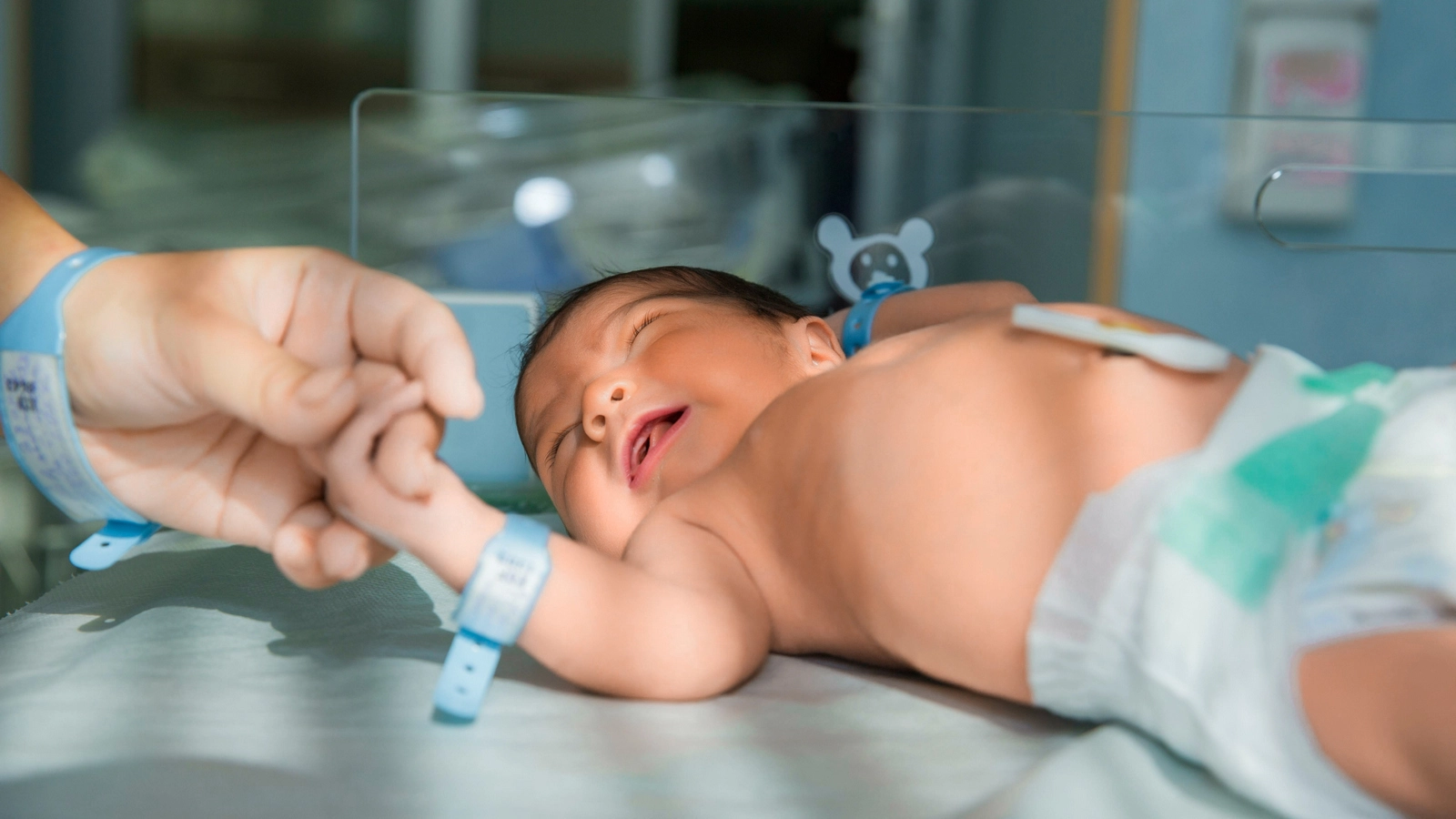
Icteric sclera in babies is a condition in which the whites of the eyes appear yellow due to bilirubin buildup. This condition is fairly common in newborns and can be caused by prematurity, insufficient breast milk intake, blood type incompatibility, infection, or disorders of the liver and bile ducts.
Moms may notice that their little one's eye whites look yellowish, especially during the first few days after birth. This condition, known as icteric sclera, occurs when bilirubin builds up in the blood and can be one of the signs of jaundice in babies.
Although it is fairly common in newborns, icteric sclera does not always indicate a dangerous condition. The timing of its appearance, whether the yellowing is becoming more pronounced, and your little one's overall condition should be monitored to determine whether the condition is within the normal range or requires medical examination.
What Is Icteric Sclera in Babies?
Icteric sclera is a condition in which the whites of a baby's eyes appear yellow. This color change occurs due to a buildup of bilirubin, a yellow substance produced when red blood cells in the body are broken down.
In newborns, icteric sclera is generally one of the signs of jaundice. Yellowing may also appear on the skin, especially when bilirubin levels in the blood increase.
This condition is fairly common in newborns. However, icteric sclera does not always mean that the condition is dangerous. Moms should pay attention to when the yellowing appears, how far it spreads, and the baby's overall condition.
Is Icteric Sclera in Babies Normal?
Icteric sclera can be part of a normal condition in newborns, but in certain circumstances, it may indicate a health problem that requires medical examination.
1. Physiological Icteric Sclera That Commonly Occurs
Physiological icteric sclera usually appears after the baby is around 24 hours old. This occurs because the baby's liver is still adapting to process and remove bilirubin from the body.
Generally, the yellow color first appears on the face and whites of the eyes before spreading to other parts of the body. In many babies, the condition gradually improves within a few days to around two weeks.
As long as the baby remains active, feeds well, and does not show any warning signs, the doctor may monitor the condition to ensure that bilirubin levels remain within a safe range.
2. Pathological Icteric Sclera That Requires Medical Examination
Icteric sclera should be monitored closely if it appears too early, especially within the first 24 hours after birth, or if the yellowing becomes more intense and is accompanied by changes in the baby's condition.
Possible causes include blood type incompatibility, infection, liver or bile duct disorders, and other conditions that cause bilirubin levels to rise. Bilirubin testing is necessary to determine whether the baby requires specific treatment.
Causes of Icteric Sclera in Babies
Icteric sclera in babies can occur due to various factors that cause bilirubin levels in the blood to increase. Some causes are related to natural processes in the baby's body after birth, while others may be associated with certain health conditions.
1. The Baby's Liver Function Is Not Fully Developed
The liver plays a role in processing bilirubin so it can be removed from the body. In newborns, liver function is still developing, so bilirubin processing is not yet as efficient as it is in adults.
As a result, bilirubin can accumulate more easily in the blood, causing the skin and sclera to appear yellow.
2. Red Blood Cells Are Broken Down More Quickly
Newborns have a relatively high number of red blood cells, and these cells have a shorter lifespan. When red blood cells are broken down, the body produces bilirubin.
If bilirubin is produced faster than the liver can process it, bilirubin levels may increase and cause jaundice.
3. The Baby Has Not Received Enough Breast Milk
Babies who do not receive enough breast milk may urinate and have bowel movements less frequently. Meanwhile, bilirubin that has been processed by the body needs to be eliminated through urine and stool.
Therefore, adequate breast milk intake is important to help meet the baby's fluid and energy needs while supporting the elimination of bilirubin.
4. Breast Milk Components Affect Bilirubin Processing
In some healthy babies who feed well, jaundice may last longer due to factors associated with breast milk. This condition is known as breast milk jaundice.
The baby generally continues to appear healthy and gains weight well. However, a doctor should still make sure that there are no other underlying causes of the yellowing.
5. Differences in the Mother's and Baby's Blood Types
Blood type incompatibility between the mother and baby, including Rh incompatibility, can cause antibodies from the mother to destroy the baby's red blood cells more quickly.
As a result, bilirubin production increases, and the baby may develop more severe jaundice.
6. The Baby Is Born Prematurely
Premature babies are at greater risk of developing jaundice because their liver is still immature. Their liver's ability to process bilirubin is also not yet as effective as that of full-term babies.
Therefore, bilirubin levels in premature babies are usually monitored more closely.
7. Infection in Babies
Certain infections can affect a baby's condition and may be associated with increased bilirubin levels. If icteric sclera is accompanied by fever, extreme lethargy, difficulty feeding, or changes in behavior, the baby should be examined immediately.
8. Liver or Bile Duct Disorders
Disorders of the liver or bile ducts can make it difficult for bilirubin to be eliminated from the body. One sign to watch for is dark-colored urine and pale-colored stool.
Conditions like these require medical examination to determine the cause and appropriate treatment.
9. Red Blood Cell Disorders
Certain red blood cell disorders can cause red blood cells to break down more easily. These conditions can increase bilirubin production and cause jaundice in babies.
Symptoms Accompanying Icteric Sclera in Babies
In addition to changes in the color of the whites of the eyes, icteric sclera in babies may be accompanied by several other signs that need attention. Recognizing changes in skin color, feeding patterns, urine, and stool can help Moms determine when their little one needs further attention.
1. The Baby's Skin Appears Yellow
In addition to the whites of the eyes, the baby's skin may also appear yellow. The color usually first appears on the face and can then spread to the chest, abdomen, arms, and legs as bilirubin levels increase.
2. Yellowing Spreads from the Face to the Body
The spread of yellowing to lower parts of the body should be monitored, especially if it occurs quickly or becomes increasingly intense.
Moms should not rely solely on skin color to estimate bilirubin levels because a bilirubin test is needed to determine the level accurately.
3. The Baby Appears Sleepy and Is Difficult to Wake
Babies with high bilirubin levels may become sleepier or difficult to wake for feeding. This condition requires immediate medical attention, especially if it differs from the baby's usual behavior.
4. The Baby Refuses to Feed or Feeds Less
Babies who feed less may be at risk of inadequate intake. In addition, difficulty feeding can be a sign that the baby is experiencing a condition that needs to be examined.
5. Dark Yellow Urine
Newborn urine is generally relatively pale in color. Urine that appears very dark, especially when accompanied by yellow skin and eyes, should be examined because it may be associated with problems processing bilirubin.
6. Pale-Colored Stool
Stool that is very pale, gray, or clay-colored requires special attention. This condition may be associated with impaired bile flow and should be promptly examined by a doctor.
How to Treat Icteric Sclera in Babies
Treatment for icteric sclera in babies depends on bilirubin levels, the baby's age, health condition, and the underlying cause. In certain cases, adequate feeding and monitoring may be sufficient, while high bilirubin levels may require medical treatment such as phototherapy.
1. Make Sure the Baby Gets Enough Breast Milk
Moms can breastfeed the baby regularly according to their needs and make sure the baby receives enough breast milk. If the baby has difficulty feeding, consult a doctor or lactation counselor for assistance.
2. Monitor Bilirubin Levels Regularly
Doctors may check bilirubin levels through a blood test or a bilirubin measuring device. The results are then assessed based on the baby's age, gestational age at birth, health condition, and risk factors such as prematurity or blood type incompatibility. Based on this assessment, the doctor can determine whether the baby only needs monitoring or requires treatment to lower bilirubin levels.
3. Undergo Phototherapy
If bilirubin levels are sufficiently high, the doctor may recommend phototherapy. During this procedure, the baby is placed under a special light that helps convert bilirubin into a form that can be more easily eliminated by the body.
4. Receive an Exchange Transfusion in Severe Cases
In certain situations where bilirubin levels are extremely high or do not decrease sufficiently with other treatments, a doctor may consider an exchange transfusion.
This procedure is performed at a healthcare facility under close monitoring and is only administered when medically indicated.
5. Treat the Underlying Condition
If icteric sclera is caused by an infection, blood type incompatibility, liver disorder, or another condition, the doctor will determine treatment based on the underlying cause.
When Should a Baby with Icteric Sclera Be Taken to the Doctor Immediately?
Not every baby with icteric sclera requires emergency treatment. However, medical examination should be performed promptly if the yellowing appears before the baby is 24 hours old, worsens rapidly, or the baby shows concerning changes in their condition.
The baby should also be examined immediately if the icteric sclera does not improve according to the doctor's monitoring or if signs of a more serious condition appear, such as:
- The baby becomes increasingly difficult to wake or appears extremely lethargic
- The baby refuses to feed or has difficulty feeding
- The baby experiences seizures, becomes floppy, or cries in an unusual tone
- Urine is very dark or stool appears pale, gray, or clay-colored
An examination is necessary to determine the bilirubin level and make sure there are no conditions requiring further treatment. Very high bilirubin levels that are left untreated can cause serious complications affecting the nervous system.
Keep Your Little One's Skin Comfortable with MAKUKU Slim Luxury Silky
Icteric sclera in babies is characterized by yellowing of the whites of the eyes due to increased bilirubin levels and can be associated with either normal conditions or certain health problems. Therefore, Moms should pay attention to when the yellowing appears, monitor changes in their little one's condition, and seek medical examination if concerning signs occur.
In addition to monitoring your little one's health, their comfort should also be considered, including when wearing a diaper. MAKUKU Slim Luxury Silky features SAP Thin Core Technology, making it only 1.6 mm thin while evenly locking in liquid, along with Natural Fine Silk that is gentle on the skin and high absorbency for up to 12 hours to help keep your little one dry and comfortable.
FAQ
1. Is icteric sclera in babies always dangerous?
Not always. Icteric sclera can occur as part of physiological jaundice, which is common in newborns. However, an examination is necessary if the yellowing appears very early, becomes more intense, or is accompanied by other symptoms.
2. Can a baby with icteric sclera continue breastfeeding?
Yes. In general, babies should continue to receive enough breast milk regularly. If the baby has difficulty feeding or their intake decreases, Moms should consult a doctor.
3. Can exposing a baby to sunlight get rid of icteric sclera?
Exposing a baby to sunlight is not a substitute for medical phototherapy. If the bilirubin level requires treatment, the doctor will determine the appropriate therapy based on the baby's condition.