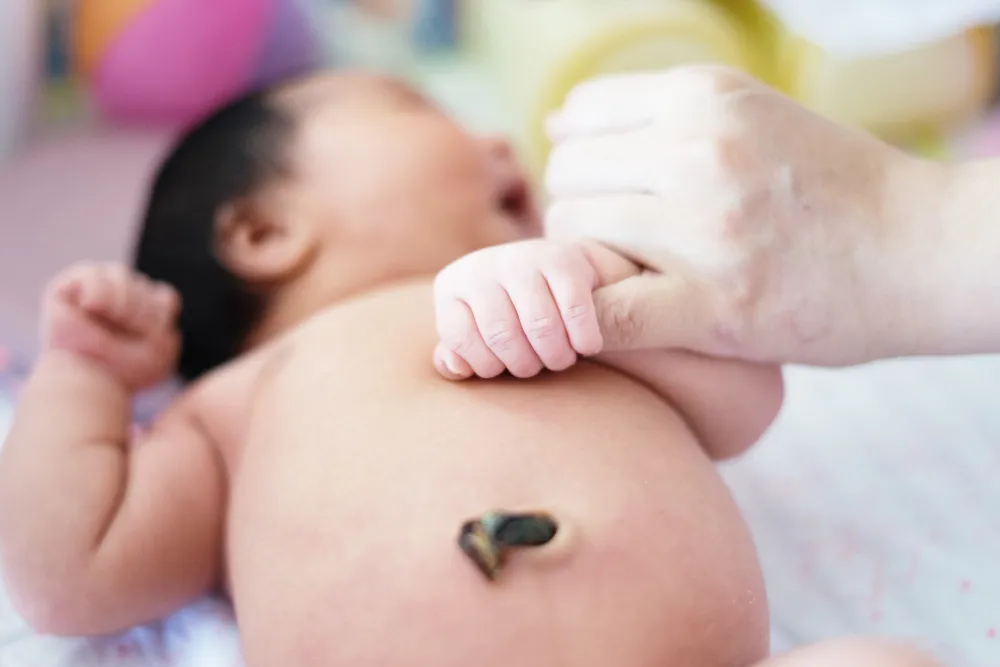
Seeing blood spots on your little one's navel can certainly make moms feel worried, even panicked. However, it should be noted that the appearance of a little blood in the area of the umbilical cord that hasn't fallen off yet or shortly after it has fallen off is actually quite common in the natural healing process of a baby's body.
Although usually normal, Moms still need to be vigilant and understand the difference between normal light bleeding and bleeding that indicates an infection. This article will thoroughly discuss the causes, symptoms to watch out for, and the right steps to care for your Little One's navel to keep it healthy.
Causes of Baby's Belly Button Bleeding
The appearance of blood on your little one's navel can be caused by various factors, ranging from natural processes to external disturbances. Here are some of the most common causes:
1. The Natural Process of Umbilical Cord Detachment
When the umbilical cord begins to dry and is about to detach, it is normal for a little blood seepage to appear in that area. This is part of the process of separating dead tissue from the baby's body, which will heal on its own.
2. Friction with Diapers or Clothing
Friction that occurs between the umbilical cord and rough clothing fabric or the hard edges of a diaper can trigger irritation. This irritation often causes small wounds that then result in blood spots on the baby's clothes or diaper.
3. Umbilical Granuloma
A granuloma is a small reddish tissue growth that appears after the umbilical cord falls off. This tissue is fragile and easily releases fluid or blood when touched or rubbed.
Symptoms or Signs of a Baby's Belly Button Bleeding
It is important for Moms to recognize the characteristics of blood that appear on the Little One's navel. Here are some features that can help Moms distinguish between normal conditions and those that need to be watched out for:
1. Light Blood Stains and Drying
These symptoms usually appear as small red or brownish blood spots that stick to clothing or diapers. This blood generally does not flow and will dry on its own as the tissue healing process progresses.
2. Active Bleeding that Continues to Seep
This symptom is marked by blood that continues to flow even though Moms have tried cleaning it repeatedly. If the blood keeps seeping out with a volume greater than just spotting, this is a sign of active bleeding that should be checked immediately.
3. Blood Accompanied by Colored or Odorous Fluid
In addition to blood, pay attention to whether there is a clear, yellowish, or green fluid coming out from the navel area. If the blood spots are accompanied by an unpleasant odor, it is a strong indication of a health problem in the Little One's navel area.
How to Treat a Baby's Bleeding Navel
If Moms find a little blood on the baby's navel, don't rush to worry. Follow these first aid steps at home:
1. Gently Press with Sterile Gauze
Use a sterile gauze to gently press the bleeding area for a few minutes until the bleeding stops. Make sure your hands are thoroughly washed with soap before touching your Little One's navel area.
2. Keep the Navel Area Dry and Open
Avoid covering the navel with a plaster or fabric that is too tight to ensure proper air circulation. A dry area will speed up the scab formation process and prevent bacterial growth.
3. Consultation with a Pediatric Specialist
If the bleeding does not stop or signs of infection such as fever appear, immediately take your child to the doctor. The doctor may prescribe an antibiotic ointment or perform minor medical procedures to treat the granuloma.
How to Prevent a Baby's Belly Button from Bleeding
Prevention is certainly better than cure. Moms can minimize the risk of bleeding at the navel with the following care tips:
1. Clean Only with Boiled Water
Simply clean the navel area using cotton or a soft cloth that has been moistened with boiled water if it gets dirty. Always dry the area again by gently patting it with a clean, soft towel.
2. Avoid Using Powder
Do not sprinkle powder, oil, or any traditional concoctions on the umbilical cord that has not yet detached. The use of these substances can actually trap moisture and trigger infections in the umbilical tissue.
3. Choose Diapers with Special Bayi baru lahir Design
Use diapers that have a special cut at the front to avoid covering or rubbing against the umbilical cord. The right diaper design will allow the navel area to be exposed to air, enabling it to dry faster and remain safe from friction wounds.
Maintaining cleanliness and dryness of the umbilical cord area is the key to preventing a baby's navel from bleeding. As long as the bleeding is only in the form of small spots and the baby remains actively breastfeeding, there is no need for excessive worry. Just perform the proper routine care until the navel heals completely.

Untuk perlindungan ekstra bagi tali pusat Si Kecil, Moms bisa mengandalkan MAKUKU Comfort Fit. This product is equipped with the Belly Guard Protection feature, which is a design U-Shape specifically on the waist section of diaper size Bayi baru lahir (NB) that curves downward. This innovation ensures that the baby's umbilical cord is not pressed or rubbed by the diaper, thereby reducing the risk of bleeding and infection from an early stage.
FAQ
1. How long does it usually take for a baby's umbilical cord to fall off naturally?
A baby's umbilical cord will usually dry up and fall off within 1 to 3 weeks after birth. Never try to pull or force the umbilical cord to come off before its time for the safety of your little one.
2. Can a baby take a bath by soaking if the umbilical cord has not fallen off?
It is advisable to avoid bathing your little one by soaking in a bathtub until the umbilical cord has completely fallen off. Moms can simply wipe the baby's body with a damp washcloth to keep the navel dry.
3. What should be done if there is a small reddish piece of flesh after the umbilical cord falls off?
The small reddish tissue is likely an umbilical granuloma that requires a doctor's evaluation. The doctor will usually perform a simple procedure such as applying silver nitrate to help the tissue dry out.
4. What is the Belly Guard Protection feature on MAKUKU Comfort Fit?
Belly Guard Protection is a U-shaped cut design on the front of the MAKUKU Comfort Fit diaper in size NB. This feature serves to protect the umbilical cord that has not yet fallen off from being covered by the diaper, thus preventing friction and exposure to urine.
5. Is the SAP technology in MAKUKU Comfort Fit safe for baby's sensitive skin?
Very safe, because the SAP (Super Absorbent Polymer) structure technology makes the diaper clump-free and capable of absorbing liquid very quickly. This keeps the diaper surface dry, so the sensitive skin of newborns is free from the risk of diaper rash.