Diapers are one of the essential items to ensure the comfort of your little one. Nowadays, there are many types of diapers available on the market with various features and materials offered. If diapers are used according to the baby's needs and size, your little one will feel comfortable, and their growth will proceed optimally.
Unfortunately, there are still many misleading myths circulating about baby diapers that are often believed by parents. To ensure Moms don't make mistakes in caring for their little one's skin, let's take a look at the following explanation compiled by MAKUKU along with insights from experts.
Myth 1: Diapers Are Not the Main Cause of Diaper Rash
Most parents think that diaper rash is caused by unsuitable diapers. In fact, this is only one of many factors that can trigger diaper rash. According to the Indonesian Pediatric Society (IDAI), diaper rash can be caused by a combination of several factors, such as:
- Excessive skin moisture due to infrequent diaper changes
- Fungal or bacterial growth in the enclosed diaper area
- Reactions to chemicals in soap, wet wipes, or detergent
- Friction between the baby's skin and the surface of the diaper or clothing
Diaper rash can also occur if the cleanliness of the baby's genital area is not properly maintained. Therefore, diapers are not the main cause of the rash, but rather the moisture and improper care of the diaper area.
Tips from pediatricians:
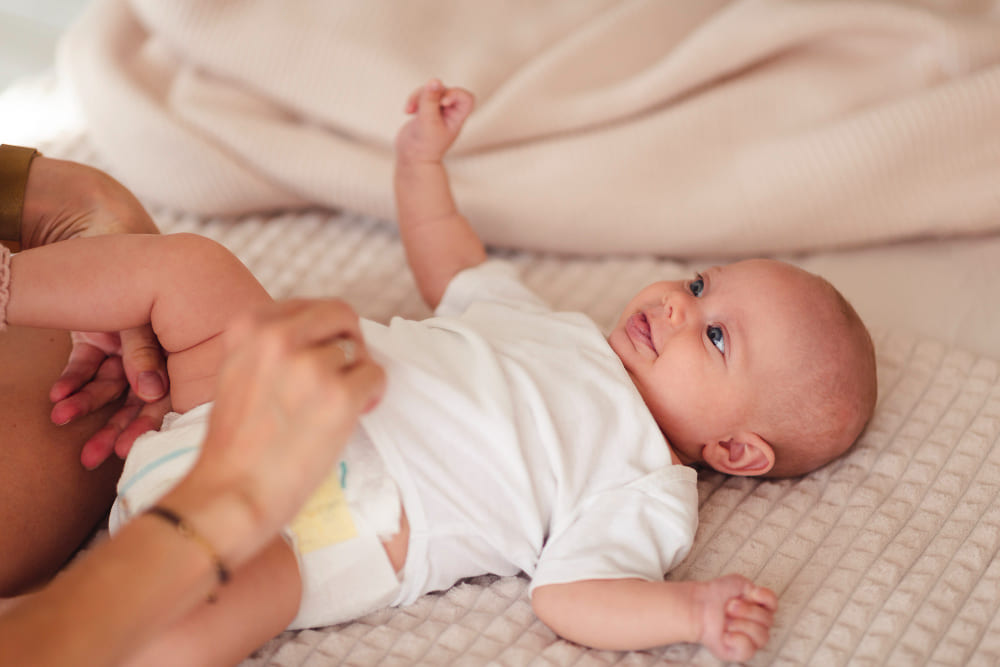
Keep your baby's skin moisturized by changing diapers regularly every 3–4 hours, using warm water or alcohol-free wipes to clean the diaper area, and gently drying it before putting on a new diaper.
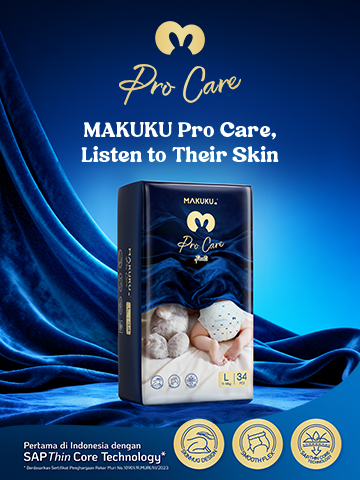
For extra protection, choose diapers with high absorbency and a soft surface, such as MAKUKU Slim, which uses SAP Thin Core Technology. This technology evenly locks in liquid, keeps the surface dry, and helps reduce the risk of diaper rash.
Myth 2: Larger Diapers Can Prevent Rashes Diapers
Many people assume that using larger-sized diapers can prevent rashes because they are thought to provide more air space. However, this thinking is not quite accurate.
One of the main causes of diaper rash is the friction between the baby's skin and the damp surface of the diaper. If the diaper size is too large, urine can easily leak and spread to a wider area, making the skin even more moist and at risk of irritation.
Medical fact: The selection of diaper size should not be based on age, but on the baby's weight. A well-fitting diaper will maintain a comfortable position, not easily come off, and minimize friction on the baby's skin.
Example:
MAKUKU Slim is available in various sizes tailored to the baby's weight. Its thin design, only 1.6 mm thick, soft, and elastic allows your little one to move freely without feeling stuffy or experiencing excessive friction on their skin.
Myth 3: Rash Only Occurs in the Buttocks Area
Diaper rash is often associated only with redness in the buttocks area. In fact, rashes can appear on any part of the body covered by a diaper, such as the groin, thigh folds, and waist.
According to pediatric dermatologists, diaper rash is a form of skin inflammation (irritant contact dermatitis) caused by exposure to moisture, friction, and urine or feces residue on the skin. Symptoms can include redness, soreness, itching, and peeling or flaking skin.
Preventive measures:
- Ensure the diaper area is always clean and dry.
- Use protective cream such as zinc oxide or petroleum jelly.
- Choose diapers with an air layer and good circulation to keep the skin from becoming moist.
MAKUKU Slim has an air cavity surface and 3D Surface that helps reduce direct contact with the Little One's skin, maintains air circulation, and keeps the skin soft.
Myth 4: Must Use Powder on Baby's Diaper Area
Many parents in Indonesia still believe that using baby powder can keep their little one's skin from becoming moist. Unfortunately, this habit can actually pose health risks.
Powder has fine particles that can accumulate in skin folds and mix with sweat. This condition can cause clogged pores and exacerbate moisture in the diaper area. If used near the genital area, powder can even increase the risk of fungal or bacterial infections.
American Academy of Pediatrics (AAP) also emphasizes that the use of powder is not recommended because its fine particles can be inhaled by babies and irritate the respiratory tract.
Safe alternatives:
Use natural protective creams such as zinc oxide, coconut oil, or aloe vera, which form a protective layer on the skin. Choose products labeled hypoallergenic and fragrance-free to avoid triggering allergic reactions.
Myth 5: Diapers Affect the Shape of Baby's Legs
Some parents worry that diapers might make a baby's legs appear splayed or O-shaped. However, this is completely normal and not related to diaper use.
According to Dr. Rani Oktaviani, Sp.A, the position of a baby's legs appearing open when wearing a diaper is due to the natural development of the hip joints. A baby's legs do appear somewhat curved in the first year of life and will gradually straighten as they grow, usually by the age of 2–3 years.
Medical fact: There is no scientific evidence that the use of diapers, whether cloth or disposable, can affect the shape of a baby's bones or legs.
The most important thing is to choose diapers with soft, elastic materials that fit the baby's body so the Little One can move freely. MAKUKU Slim with its thin and elastic design helps maintain comfort without pressing on the thigh or waist area.
Now Moms already know, not everything often heard about diapers is true. Many myths about diaper rash are actually not medically based.
The key to baby skincare is keeping the diaper area dry, changing diapers regularly, and choosing diapers that are soft and have good air circulation.
For Moms who want to provide the best comfort for their little ones, MAKUKU Slim comes with advantages:
- SAP Thin Core technology that maximally locks in liquid and keeps the surface dry
- Thickness of only 1.6 mm so that the Little One can move freely without feeling stuffy
- 3D surface and air cavities to prevent moisture and irritation
- U-Shape Belly Button that protects the newborn baby's navel
- Urine indicator as a reminder for diaper change.
With the right diaper, Moms can keep the Little One's skin healthy and rash-free every day.