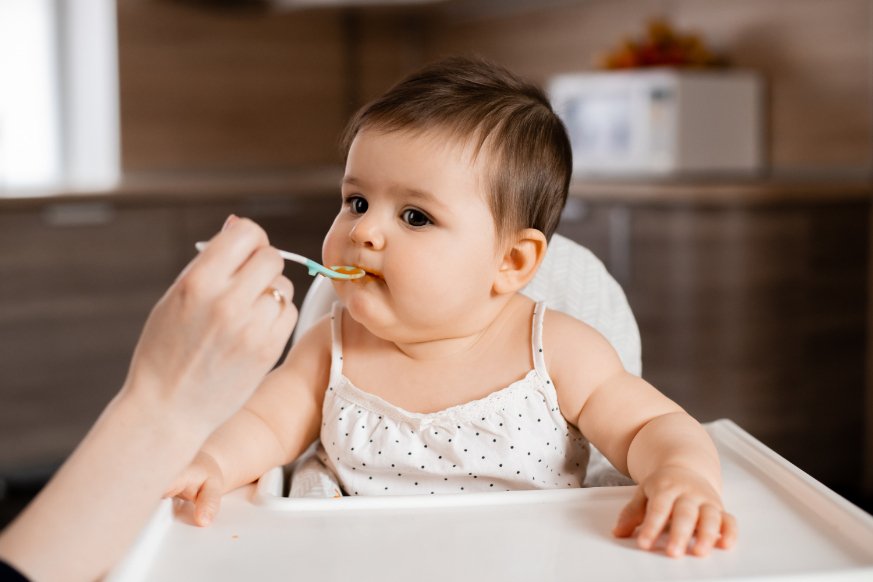
MPASI is introduced when a baby is around 6 months old to complement their increasing energy and nutrient needs while continuing breastfeeding. Good complementary feeding should be introduced at the right time, provide adequate nutrition, be safe and hygienic, and be given responsively according to your little one’s hunger and fullness cues. Food texture, frequency, and portion sizes should also be adjusted according to age.
At around 6 months of age, your little one’s energy and nutrient needs begin to increase, so breast milk alone is no longer sufficient to meet all of these needs. At this stage, Moms can start introducing Complementary Foods for Breast Milk (MPASI) while continuing to breastfeed.
Introducing complementary foods is not only about introducing food but also helping your little one learn about different tastes, textures, and ways of eating. Therefore, MPASI should be given while considering age, nutritional needs, food texture, hygiene, and your little one’s responses during mealtimes.
What Is MPASI and When Should It Be Introduced?
MPASI stands for Makanan Pendamping ASI, or complementary foods for breast milk. These are foods and drinks given to babies starting at around 6 months of age to complement nutritional needs that can no longer be met by breast milk alone.
During the first six months, babies are recommended to receive exclusive breastfeeding. After reaching 6 months of age, a baby’s energy and nutrient needs begin to increase, so complementary foods need to be introduced. Breastfeeding should continue according to your little one’s needs.
MPASI does not mean immediately replacing breast milk. At the beginning of the complementary feeding period, your little one still needs breast milk while gradually learning to consume foods with increasingly varied textures and types.
Benefits of MPASI for Babies
Appropriate complementary feeding can help meet your little one’s increasing nutritional needs as they grow. In addition, the complementary feeding period is also an important time to introduce different foods and build healthy eating habits.
Some of the benefits of MPASI include:
- Complements energy and nutrient needs: MPASI helps meet the increasing needs for energy, protein, vitamins, minerals, and other nutrients after 6 months of age.
- Supports growth and development: Adequate and varied food intake helps support your little one’s physical growth and development.
- Introduces different tastes and foods: MPASI gives babies the opportunity to experience different tastes, aromas, colors, and food textures.
- Develops eating skills: Gradually changing food textures helps your little one learn to chew, bite, pick up food, and eat independently according to their developmental stage.
- Builds healthy eating habits: Positive eating experiences from an early age can help your little one become familiar with healthy eating patterns.
Important Things to Consider When Giving MPASI
To help MPASI meet your little one’s nutritional needs, Moms should pay attention to several key principles when providing complementary foods.
1. At the Right Time
MPASI should be introduced at around 6 months of age, when a baby’s energy and nutrient needs begin to increase and can no longer be met by breast milk alone.
Introducing MPASI too early or too late should be avoided. At the beginning, Moms can introduce food in small amounts and gradually increase the portion according to your little one’s ability and needs.
2. Adequate and Nutrient-Dense
MPASI should provide the energy, protein, vitamins, minerals, and other nutrients needed to support your little one’s growth and development.
Try to provide a variety of foods, especially animal-based protein sources such as eggs, fish, chicken, meat, or liver. Complete the meal with staple foods as a source of energy, plant-based protein, vegetables, fruit, and sources of fat as needed. The Indonesian Ministry of Health also emphasizes considering the amount, frequency, texture, and variety of food according to the child’s age.
3. Safe and Hygienic
Food for your little one needs to be prepared, cooked, stored, and served hygienically to reduce the risk of contamination.
Moms can wash their hands before preparing and serving food, use clean eating utensils, and make sure food ingredients are cooked thoroughly. Food should also be stored properly to keep it safe for consumption.
4. Given Responsively
Responsive feeding means that Moms pay attention to your little one’s hunger and fullness cues during mealtimes.
Feed slowly and patiently, and encourage your little one to eat without forcing them. If your little one refuses food, Moms can try again at another time or introduce the food with a different combination or texture.
Try to make mealtimes comfortable and enjoyable. Avoid feeding while your little one is playing or watching something so they can focus more on recognizing food and their fullness cues.
A Balanced and Nutritious MPASI Menu
MPASI should not consist only of staple foods or carbohydrate sources. Your little one needs a variety of foods to get the different nutrients needed for growth and development.
In one meal, Moms can combine:
- Staple foods: rice, potatoes, corn, cassava, sweet potatoes, or other carbohydrate sources.
- Animal-based protein: eggs, fish, chicken, meat, liver, and other animal products.
- Plant-based protein: tofu, tempeh, legumes, and their products.
- Vegetables and fruit: such as spinach, carrots, broccoli, tomatoes, bananas, mangoes, or other fruits.
- Sources of fat: which can come from oil, coconut milk, and foods containing fat.
Animal-based protein should be an important part of MPASI because it provides various nutrients needed for growth. In addition, food should be nutrient-dense because your little one’s stomach is still relatively small.
Moms can also gradually introduce different foods so your little one becomes accustomed to various types of food and receives a wider range of nutrients.
MPASI Texture, Frequency, and Portion Size by Age
The texture, frequency, and amount of MPASI should be adjusted according to your little one’s age and eating abilities. Food should gradually become more textured as the baby’s eating skills develop.
| Age | Texture | Frequency | Portion per Meal |
|---|---|---|---|
| 6–8 months | Thick porridge or mashed food | 2–3 main meals + 1–2 snacks | Start with 2–3 tbsp, gradually increasing to ½ of a 250 mL bowl |
| 9–11 months | Finely to coarsely chopped food and finger foods | 3–4 main meals + 1–2 snacks | ½–¾ of a 250 mL bowl |
| 12–23 months | Family foods with texture adjusted as needed | 3–4 main meals + 1–2 snacks | ¾–1 of a 250 mL bowl |
The Indonesian Ministry of Health guidelines indicate that at 6–8 months, MPASI can start with 2–3 tablespoons and gradually increase to around ½ of a 250 mL bowl. At 9–11 months, the portion can increase to around ½–¾ of a bowl, while at 12–23 months it can reach around ¾–1 bowl.
Although portion guidelines are available, Moms should still pay attention to your little one’s hunger and fullness cues. Do not force your baby to finish their food if they are already showing signs of fullness.
Foods and Drinks to Avoid During MPASI
Not all foods and drinks are suitable for babies who are starting MPASI. Moms need to consider the type of food, nutritional content, and texture safety.
Some foods and drinks that should be avoided or limited include:
- Honey before 1 year of age, as it can increase the risk of botulism in babies.
- Foods and drinks high in sugar, such as candy, sweet cakes, sugary drinks, and other sweet foods.
- Foods high in salt, including foods that contain a lot of salt or high-sodium seasonings.
- Sugary drinks and juice with added sugar, which can replace nutritious food intake.
- Foods with textures that pose a choking risk, especially foods that are hard, round, or too large for your little one’s eating ability.
- Raw or undercooked foods, especially ingredients such as eggs, meat, and fish that may carry disease-causing microorganisms.
WHO also recommends not adding sugar or salt to complementary foods and advises avoiding foods and drinks high in sugar, salt, and trans fats.
Moms also do not need to add seasoning or sugar simply to make food more appealing. Your little one is learning to recognize the natural flavors of different food ingredients.
Conclusion
MPASI refers to complementary foods introduced at around 6 months of age to help meet your little one’s increasing energy and nutritional needs. It should still be given alongside breastfeeding and introduced gradually according to the baby’s age and eating abilities.
Good MPASI should follow the principles of being introduced at the right time, being adequate, safe and hygienic, and being given responsively. The menu should also be varied and prioritize nutrient-dense foods, including animal-based protein sources.
In addition to food types, Moms should pay attention to the texture, frequency, and portion size of MPASI. Avoid forcing your little one to eat, and do not give honey before 1 year of age or foods and drinks high in sugar and salt.
With appropriate feeding and an enjoyable mealtime atmosphere, the MPASI period can be an opportunity for your little one to learn about different foods while also meeting their nutritional needs.
FAQ
1. At what age should MPASI be introduced?
MPASI is generally introduced when a baby is 6 months old. At this age, your little one’s energy and nutrient needs begin to increase, so breast milk alone is no longer sufficient to meet all of their needs.
2. What foods are good for a baby’s first MPASI?
Moms can provide nutrient-dense and varied foods, including staple foods, animal- and plant-based protein, vegetables, fruit, and sources of fat. Animal-based proteins such as eggs, fish, chicken, and meat can be an important part of an MPASI menu.
3. How many times a day should a baby eat MPASI?
At 6–8 months, MPASI can be given 2–3 times a day, with 1–2 snacks as needed. The frequency then increases to 3–4 main meals per day at 9–23 months, with 1–2 snacks as needed.