The AC temperature for babies should be adjusted to keep the room comfortable without making your little one feel too hot or too cold. A temperature of around 24–26°C is often used as a comfort guideline, but Moms should also consider the baby's condition, clothing, humidity, and air circulation in the room.
Adjusting the room temperature is one of the things to consider when your little one sleeps or plays in an air-conditioned room. The AC temperature for babies should keep the room comfortable without making your little one feel too hot or too cold.
Babies, especially newborns, are still developing their ability to regulate body temperature. Therefore, Moms need to pay attention to the room temperature as well as signs of the baby's comfort, rather than relying solely on the number shown on the AC remote.
What Is the Ideal AC Temperature for Babies?
A comfortable room temperature can help your little one stay calm and prevent them from feeling too hot or too cold while staying in an air-conditioned room. Moms can set the AC temperature for babies to around 24–26°C, then pay attention to clothing, humidity, and room conditions to make sure the temperature remains comfortable for the baby.
In fact, there is no single exact temperature that must be used for your little one. This is because a baby's comfort in an air-conditioned room can be affected by clothing, humidity, and the overall room conditions. As a practical guideline, Moms can keep the room temperature around 24–26°C and adjust it based on the baby's physical response.
What should be avoided is overheating the baby, especially during sleep. The American Academy of Pediatrics (AAP) recommends preventing babies from becoming overheated and avoiding excessive clothing or blankets, as excessive body temperature has been associated with an increased risk of sudden infant death syndrome (SIDS), which refers to the sudden and unexplained death of a baby during sleep after a thorough investigation.
Moms, to make sure your little one is not too hot, check their chest or the back of their neck rather than their hands and feet. A baby's hands and feet often feel cooler naturally, so they are not the best indicators of whether the baby is too cold or too hot.
Benefits of Setting the Right AC Temperature for Babies
Setting the AC temperature appropriately helps create a comfortable environment for babies, especially during sleep. The room temperature should be kept comfortable without making the baby feel too cold or too hot.
1. Helps Babies Sleep More Comfortably
A comfortable room temperature, around 24–26°C, can help your little one sleep more peacefully because their body does not have to work too hard to regulate its temperature (thermoregulation). If the room is too hot, the baby may sweat, become fussy, or wake up more frequently, while a room that is too cold may make the baby feel cold, shiver, have cool skin, and sleep uncomfortably.
2. Reduces the Risk of Heat Rash and Dehydration
An overly hot environment can cause babies to sweat more, increasing the risk of miliaria (heat rash) and fluid loss through sweating. Babies are also more susceptible to dehydration in hot weather because their ability to regulate body temperature is not yet as developed as that of adults.
3. Helps Maintain a Stable Body Temperature
Babies' thermoregulation abilities are still developing, making them more susceptible to changes in body temperature than adults. Therefore, avoid extreme temperature changes and adjust the baby's clothing according to the room conditions rather than relying solely on the temperature shown on the AC remote.
Tips to Keep Babies Comfortable in an Air-Conditioned Room
Besides setting the right AC temperature for babies, there are several things Moms can do to keep their little ones comfortable in an air-conditioned room.
1. Avoid Directing the AC Toward the Baby
Adjust the direction of the AC airflow so that it does not blow directly onto your little one's body or face. Continuous airflow directly onto the baby can make them uncomfortable, especially when their body is sweaty.
Use the swing function or direct the airflow upward so that cool air can circulate more evenly throughout the room. Make sure the room temperature remains comfortable and that the baby's sleeping area does not become too cold.
2. Dress Your Baby in Comfortable Clothing
Choose lightweight, breathable clothing that absorbs sweat to keep your little one comfortable in an air-conditioned room. Avoid putting your baby in too many layers simply because the AC is on, as this can also make them too hot.
When sleeping, dress your little one in lightweight sleepwear that is appropriate for the room temperature. If the room feels cooler, Moms can add one thin layer of clothing, but avoid overly thick clothing or blankets to prevent the baby from overheating.
3. Pay Attention to Your Baby's Physical Condition
Do not rely only on your baby's hands and feet to determine whether they are cold. Touch their chest or the back of their neck to check whether their body feels too warm.
If your baby's skin feels hot or sweaty, reduce the number of clothing layers or adjust the room temperature. On the other hand, if their body feels cold, Moms can add one comfortable layer of clothing.
4. Keep the AC Clean
A dirty AC filter can reduce indoor air quality because dust and particles can accumulate inside the cooling system. Clean the filter approximately every two weeks and have the AC serviced every 3–6 months, or according to the manufacturer's instructions.
Make sure the baby's room has good air circulation and is not excessively humid so that your little one remains comfortable. Moms can also open the windows periodically when the AC is not in use to help improve air exchange in the room.
Risks of Improper AC Temperature Settings for Babies
Improper AC settings can make babies feel too hot, too cold, or uncomfortable due to effects on their skin and respiratory system. In addition to temperature, humidity and AC cleanliness should also be considered to maintain good air quality in the baby's room.
1. Babies Can Overheat More Easily
A room that is too hot, excessive layers of clothing, or thick blankets can cause overheating. Signs may include a hot body, sweating, flushed cheeks, faster breathing, and fussiness.
In more severe cases, overheating can lead to heat exhaustion or heatstroke. The baby should be moved to a cooler environment and receive medical attention if they show severe symptoms.
2. Your Little One Can Become Too Cold
An AC temperature that is too low can cause cold stress, especially because a baby's ability to regulate body temperature (thermoregulation) is still developing. Signs may include cool or pale skin, shivering, or increased lethargy.
If the baby's body temperature drops below 36.5°C, this should be taken seriously. The baby should be warmed gradually while their condition is monitored.
3. Dry Skin and Airways
Air that is too dry due to AC use can reduce skin moisture, making babies more prone to dry, cracked, or irritated skin, particularly babies with sensitive skin or eczema.
Low humidity can also dry out the mucous membranes in the nose and throat, which may cause nasal congestion, throat discomfort, or increased fussiness.
4. Poor Indoor Air Quality
An AC filter that is not cleaned regularly can accumulate dust, dust mites, and other particles that may circulate back into the room. This can affect indoor air quality and trigger symptoms in sensitive babies.
Exposure to air containing high levels of particles may worsen symptoms such as sneezing, nasal congestion, coughing, or wheezing, especially in babies with allergies or sensitive airways.
Conclusion
There is no single fixed AC temperature for babies, but Moms can keep the room temperature around 24–26°C and adjust it based on the condition of their little one. Make sure the baby is neither too hot nor too cold by paying attention to their clothing, room humidity, and physical signs of comfort.
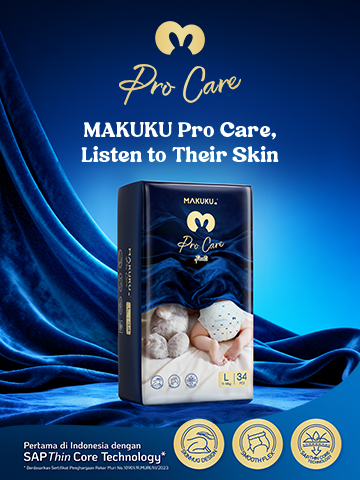
In addition to adjusting the room temperature, your little one's comfort can also be supported by choosing a soft, thin, and highly absorbent diaper such as MAKUKU Slim Luxury Silky. Equipped with SAP Thin Core Technology that makes the diaper as thin as 1.6 mm, Natural Fine Silk made from natural silk fibers, and high absorbency with protection for up to 12 hours, your little one can stay dry and comfortable while playing and resting.
FAQ
1. Can babies sleep with the AC on all night?
Yes, Moms, as long as the room temperature is comfortable and your little one is neither too hot nor too cold. Make sure the AC airflow is not directed straight at the baby and continue to follow safe sleep practices.
2. Is an AC temperature of 20°C too cold for babies?
A temperature of 20°C may feel quite cold for some babies, especially if they are wearing lightweight clothing. Moms can choose a temperature of around 24–26°C and check the baby's chest or the back of their neck to make sure their body remains comfortable.
3. How can I tell if my baby is cold in an air-conditioned room?
Moms can touch the baby's chest or the back of their neck to check their body temperature. If the baby feels cold, add one comfortable layer of clothing and adjust the room temperature accordingly.