As a parent, seeing your child grow and develop well is certainly a dream. One of the important milestones during the toddler years is the ability to walk. Typically, children start learning to stand and take steps between the ages of 8–18 months. However, the ability to walk can vary for each child.
Moms, there's no need to panic immediately if your little one is late in walking. There are many factors that can influence this, and most are still considered normal. This article will discuss the causes of delayed walking in children, ways to stimulate their walking ability, and signs of when you should consult a doctor.
Causes of Delayed Walking in Children
There are several common factors that can cause a child to walk late, namely:
- Delayed motor development, misalnya karena lahir prematur.
- Lack of stimulationi, anak terlalu sering digendong atau jarang eksplorasi.
- Muscle and nerve disorders, seperti cerebral palsy, hipotonia, atau distrofi otot.
- Brain injury or infection, for example, meningitis., misalnya meningitis.
- Nutritional issues, seperti kekurangan vitamin D yang bisa menyebabkan rakitis.
- Pregnancy factors, misalnya infeksi TORCH yang berdampak pada tumbuh kembang.
How to Overcome Delayed Walking in Children

If Moms feel that the Little One is a bit slow, don't worry. With the right stimulation, walking abilities can develop faster. Here are some ways Moms can do at home:
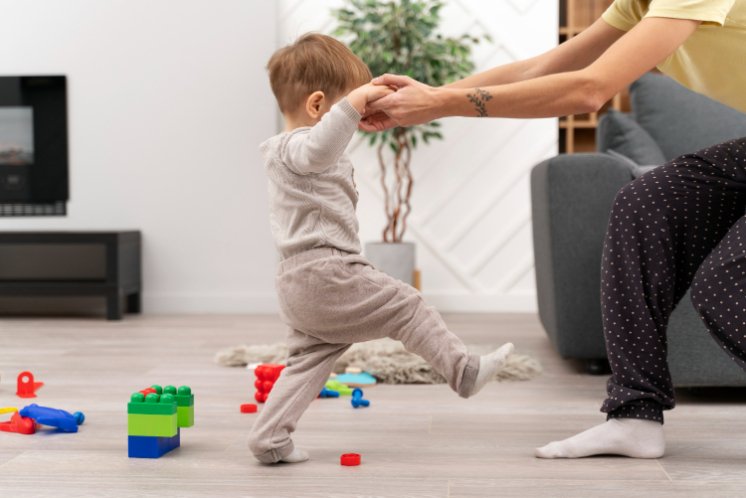
1. Guided Walking Practice
Hold both of their hands from behind, let them step slowly on the safe floor. Do this every day so the Little One gets used to stepping and learns to maintain balance.
2. Reduce Carrying Time
Carrying a child too often can lead to less practice. Let them play on the floor with their favorite toys, so their leg muscles become more trained.
3. Use Push Toys
Choose a sturdy push toy, not one that can be ridden. This toy helps children learn to control their steps and train hand-foot coordination.
4. Create a Small Challenge
Place their favorite toy or healthy snack a bit farther away. This will motivate them to stand, crawl, or walk towards it.
5. Playing soccer
Encourage your little one to chase the rolling ball. This activity strengthens their legs while making the learning-to-walk experience more enjoyable.
6. Get used to going barefoot at home
Let them walk barefoot on a clean and safe floor. This helps the child feel the ground and improves body balance.
7. Up and Down Exercise
Use a small step or low ladder that is safe. Hold their hand while going up and down to strengthen leg muscles. Remember, always supervise to ensure the Little One does not fall.
8. Limit the Use of Assistive Devices
Avoid using baby walkers. Although they seem helpful, these devices actually hinder a child's natural stimulation and can increase the risk of injury.
9. Turn Everyday Activities into Exercise
For example, ask the child to pick up their own toys, stand up from a sitting position without assistance, or walk towards Mom when called. These simple activities help train independence as well as motor skills.
10. Don't Forget Positive Support
Give a small compliment every time they succeed in taking a step. The growing confidence will make them more eager to try again.
When to Be Cautious?
Moms, there is no need to worry if your child has not started walking by the age of 15–18 months. However, there are some signs to watch out for:
- A child is not able to walk at the age of 2 years.
- The child only walks on tiptoes or limps.
- There is an abnormality in the shape of the foot or a significant difference in foot size.
- The leg muscles appear too stiff or too limp.
- The child shows no interest in moving or standing at all.
- Children experience other developmental delays, such as difficulty speaking or inability to follow simple instructions.
If Moms find the signs above, it is advisable to immediately consult a pediatrician. The doctor will examine the physical condition, assess motor skills, and provide appropriate stimulation or therapy guidance.
Every child has a different development timeline. Don't worry too much or compare your little one with other children. The most important thing is to provide enough stimulation, let them explore, and always support them with love. If you feel doubtful or anxious, consult a doctor to get the right guidance.