Toilet training is a crucial stage in your little one's development, as they learn to use the toilet independently without the aid of diapers. Many moms wonder when the best time to start toilet training is and how to ensure their little one feels comfortable.
Every little one has different readiness, so moms need to understand the signs and apply the right method to make the toilet training process easier and more enjoyable.
Toilet training is not just about teaching your little one to use the toilet, but also about fostering independence, body awareness, and hygienic habits from an early age. With a patient and consistent approach, your child can learn to recognize their body's needs and feel confident when using the toilet.
Signs Your Child Is Ready for Toilet Training
Before starting toilet training, it's important for Moms to ensure that the little one is already showing signs of readiness. Starting too early can make the little one feel pressured and actually slow down the learning process.
Some signs that your little one is ready for toilet training include:
-
The child can start to indicate when their diaper is wet or dirty.
-
The diaper stays dry for about 2 hours or more.
-
Children begin to show interest in seeing others use the toilet
-
Children can follow simple instructions
-
The child is able to open and wear pants independently.
-
The child shows discomfort when their diaper is dirty.
This readiness usually appears between the ages of 18 months to 3 years, but each child develops at a different pace. Therefore, Moms should not compare their child's development with other children.
How to Train Children for Toilet Training
After observing signs of readiness, Moms can begin introducing toilet training gradually. The key elements in this process are patience, consistency, and a positive atmosphere.
1. Introducing the Toilet
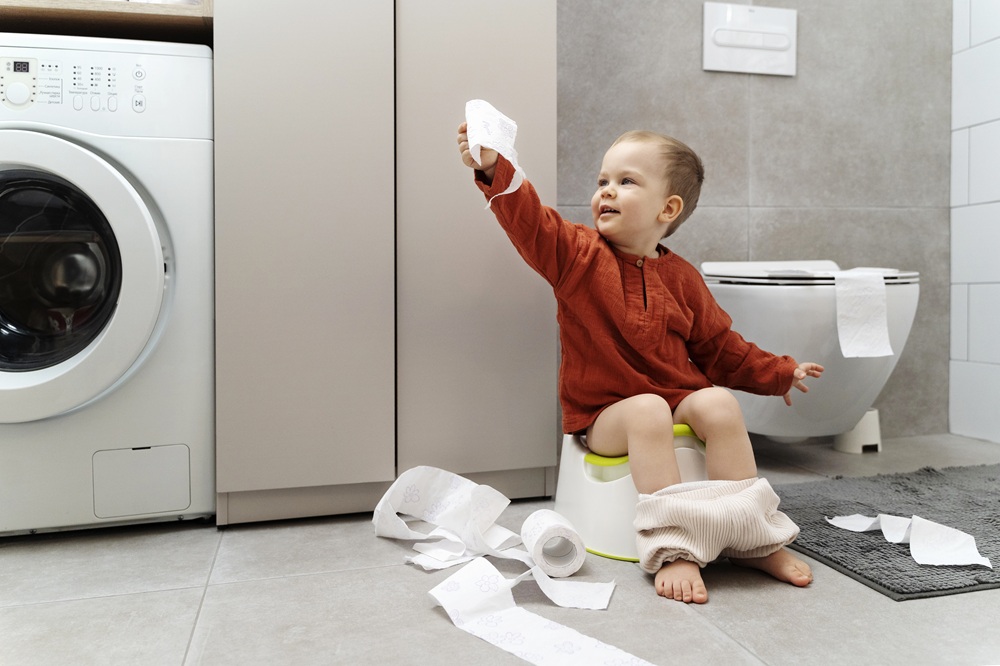
The first step in toilet training is to introduce your little one to the toilet. Moms can show the shape of the toilet, how to sit on it, and explain its function in simple language.
Use a relaxed approach so that your little one doesn't feel scared. Some children may feel awkward or afraid when they first see the toilet, so it's important to give them time to get used to it.
You can also use a potty chair or a special toilet seat for your little one to make them feel more comfortable and secure.
2. Giving Examples
Little ones learn many things through imitation. Therefore, setting an example is an effective way to help them understand toilet training.
Moms can explain in simple terms how the process of using the toilet works. For example, by showing how to sit, clean oneself, and flush the toilet after finishing.
In addition, Moms can also use storybooks or educational videos about toilet training to help your little one understand the process more easily.
3. Teaching How to Use the Toilet
After your little one becomes familiar with the toilet, the next step is to teach them how to use it correctly.
Some things that can be taught include:
-
Sit in the correct position on the toilet
-
Informing Moms when wanting to use the bathroom
-
Clean yourself after finishing
-
Flushing the toilet
-
Washing hands after using the toilet
Teach each step gradually so that the little one does not feel overwhelmed. If the little one makes a mistake or experiences an "accident," avoid scolding them. Instead, provide support and encouragement to help them remain confident.
4. Make it a Routine
Routines greatly help the little one understand new habits. Moms can invite the little one to sit on the toilet at certain times every day, for example:
-
After waking up
-
After eating
-
Before sleeping
-
Every few hours
With a consistent routine, your little one will find it easier to recognize their body's patterns. Gradually, they'll learn to alert you when they need to go to the bathroom.
In addition, giving praise when your little one successfully uses the toilet can also boost their motivation. However, remember that the toilet training process takes time. Some children may learn in a few weeks, while others may take longer.

Start your little one's toilet training journey more comfortably with MAKUKU Comfort Fit Pants S. Begin your little one's toilet training journey more comfortably with MAKUKU Comfort Fit Pants S.
Its soft, flexible, and snug design helps your child stay comfortable while learning to recognize their bathroom needs. Support your child's learning process to be more confident and free to move every day.
FAQ
What Age for Toilet Training?
Toilet training is usually introduced to children aged 18 months to 3 years, depending on each child's readiness. Signs of readiness can be seen from the child's ability to indicate when the diaper is wet, follow simple instructions, and begin to show interest in using the toilet like adults.
Frequently Asked Questions Moms
What is the Absorption Capacity of Thin Diapers, MAKUKU Comfort Fit Pants S?
MAKUKU Comfort Fit Pants S has a high absorption capacity of up to approximately 400 ml of liquid. With the capacity of MAKUKU Comfort Fit Pants S, your little one can stay dry longer, ensuring comfort throughout the day.
Is MAKUKU Comfort Fit Pants S Safe for Your Little One's Skin?
Yes, MAKUKU Comfort Fit Pants S diapers are equipped with SAP (Super Absorbent Polymer) core technology which keeps them thin but still absorbs optimally.
The design helps improve air circulation and reduces heat, thereby minimizing the risk of redness and irritation. Additionally, the waistband uses soft material to remain comfortable on the baby's skin.
Does the Thin Design of MAKUKU Comfort Fit Pants S Affect the Little One's Range of Motion?
No. The slim and lightweight design of MAKUKU Comfort Fit Pants S actually helps your little one move more freely without feeling heavy or bulky. This way, they can stay active and comfortable all day long.
References:
-
https://www.alodokter.com/anak-anda-sudah-siap-diberikan-toilet-training
-
https://hellosehat.com/parenting/anak-1-sampai-5-tahun/perkembangan-balita/toilet-training/