For Moms who are planning a pregnancy, understanding how to calculate a woman's fertile period is very important. The fertile period is the best time to increase the chances of conception. Well, usually newlywed couples or Moms who already have their first child want to know when exactly the fertile period occurs. Don't worry, this article will discuss in a relaxed and clear manner how to calculate a woman's fertile period, its signs, and the factors that influence it.
Understanding Women's Fertile Period
The fertile period for women is the time when the egg (ovum) is ready to be fertilized by sperm. Medically, the fertile period occurs about 14 days before the next menstruation begins. However, each woman's menstrual cycle can vary. The average normal menstrual cycle is 28 days, but it can also be between 21–35 days.
- The fertile period after menstruation usually starts around the 11th to the 17th day in a 28-day cycle.
- If Moms have an irregular cycle, the calculation becomes more challenging, but it can still be estimated in certain ways.
- In fact, moms who have just given birth, experienced a miscarriage, or completed postpartum can still calculate their fertile period, even though their menstrual cycle is often not yet stable.
This fertile period is important to know not only for pregnancy programs but also for moms who want to delay pregnancy naturally.
How to Calculate the Fertile Period After Menstruation
There are several ways that Moms can use to calculate the fertile period, either manually or with the help of technology.
1. Calendar Method
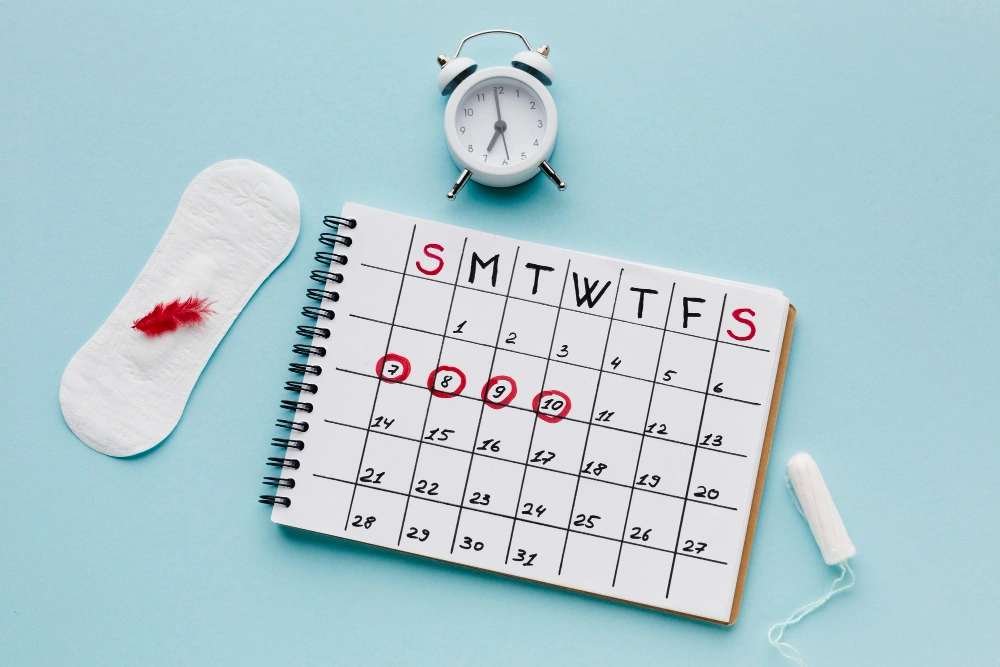
This method is the simplest way. You just need to record the menstrual cycle for at least 3–6 months.
- If your cycle is a regular 28 days, the fertile period occurs on the 12th to the 16th day.
- If your cycle is 30 days, then the fertile period occurs on the 14th to the 18th day.
Example: If the last period started on the 1st, then the fertile period is most likely between the 12th–16th.
2. Using a Fertility Calculator
Now, there are many online ovulation calculators for women, and some even come in the form of apps. You just need to enter the date of your last menstrual period, and the system will automatically provide a table of the woman's fertile period accordingly.
Several parenting brands, including the MAKUKU fertility calculator, also provide this feature to help Moms plan pregnancies more easily.
3. Observing Basal Body Temperature
Moms can measure basal body temperature (body temperature upon waking up). Usually, body temperature rises slightly (0.2–0.5°C) when ovulation occurs.
4. Observing Cervical Mucus
Cervical mucus or discharge can also be a sign. During the fertile period, cervical mucus becomes clearer, more slippery, and elastic like egg whites. This helps sperm move more quickly towards the egg.
Signs of a Woman's Fertile Period
In addition to calculating based on the calendar, Moms can also recognize the signs of a woman's fertile period from body changes:
- Cervical mucus changes to become more watery and elastic.
- Basal temperature increases after ovulation.
- Increasing sexual desire naturally.
- Breasts feel more sensitive or sore.
- Some women also experience mild cramps in the lower abdomen.
By paying attention to these signs, Moms can more easily determine the best time to engage in intercourse to conceive quickly.
Factors Affecting Fertile Period
Not all women have the same fertile period. There are several factors that can influence it:
1. Age
A woman's fertile period is usually best between the ages of 20–30. At this age, the quality of the eggs is still prime, so the chances of getting pregnant are greater. Entering the age of 35 and above, the quantity and quality of eggs begin to decline. So it's natural for moms at the age of 40 to need extra effort to get pregnant.
2. Health body and lifestyle
Being underweight or overweight can cause hormonal imbalances. Stress often disrupts the menstrual cycle. Additionally, medical conditions such as PCOS, thyroid disorders, or certain diseases can affect a woman's normal fertility period.
3. Post childbirth, postpartum, or miscarriage
After giving birth or during the postpartum period, the body needs time to return to its normal rhythm. But make no mistake, Moms can still get pregnant even if you haven't had your period again. The same applies after a miscarriage—the fertile period can return in just a few weeks.
4. Usage KB
For moms who have just stopped using birth control, the menstrual cycle usually takes time to stabilize again. But don't worry, a woman's fertile period after stopping birth control will definitely return, although the timing can vary for each person.
Moms, now you know various ways to calculate a woman's fertile period, from the calendar method, natural signs, to the help of a fertility calculator. By knowing the right time, the chances of getting pregnant become greater.
And remember, the journey of becoming a parent is not just about planning a pregnancy, but also about providing the best for the little one after birth. One thing that is often overlooked is choosing the right diaper.
MAKUKU Slim can be an option for Moms. This premium diaper is designed to be super thin (only 1.6 mm) so that the little one can move freely. Equipped with SAP Thin Core technology, this diaper can lock in liquid more effectively, is anti-clump, keeps the surface dry, and effectively reduces the risk of rashes. Additionally, it features a Belly Button U-Shape to protect the umbilical cord of newborns, as well as a urine indicator that makes it easy for Moms to know when the diaper needs changing.
With the support of comfortable premium diapers like MAKUKU Slim, Moms can focus more on enjoying precious moments with their little ones without worrying about skin irritation.
Reference
- American College of Obstetricians and Gynecologists (ACOG). (2022). Ovulation and Fertility.
- World Health Organization (WHO). (2021). Infertility: Overview and Facts.
- Mayo Clinic. (2023). Ovulation: Calculating Your Most Fertile Days.