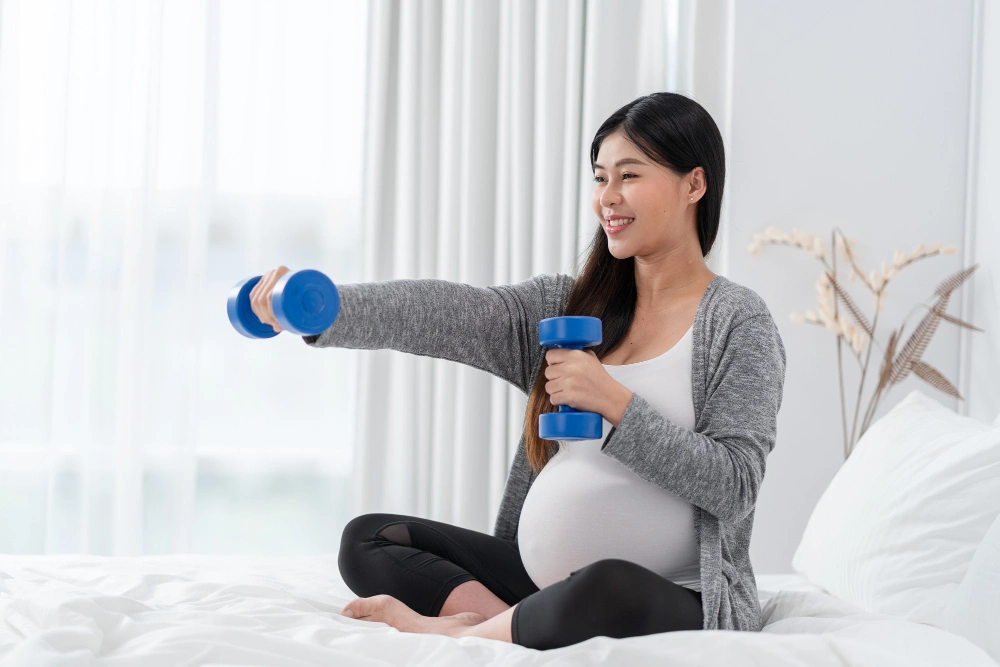
Sports are an activity that offers many health benefits. Coinciding with the National Sports Day in September, this activity should continue to be instilled, especially for Moms who are reading this article.
The question is, should pregnant women continue to exercise amidst the 'uncomfortable' condition of their bodies? As the fetus grows larger, what exercises are suitable for pregnant women and when is the ideal time?
Obstetrics and Gynecology Specialist at St. Carolus Hospital, Dr. Ivanna Theresa S, SpOG, stated that pregnant women are advised to exercise because it has many benefits for both the mother and the unborn child.
According to her, exercise is permissible for pregnant women as long as they do not have specific complaints that endanger their health. Despite the discomfort, pregnant women should keep moving and engage in activities to maintain fitness.
"There is a saying that pregnant women should not sweep or do anything, that is wrong. Because pregnant women are not sick, they should remain active. If there are no complaints during pregnancy, there is no reason for pregnant women not to exercise," said Dr. Ivanna Theresa S, SpOG in an interview session with the MAKUKU Family Team some time ago.
Why Should Pregnant Women Exercise?
Undergoing the pregnancy process is not a barrier for Moms to exercise. As previously explained, exercise is beneficial for pregnant women, especially as preparation for childbirth. When physical fitness is maintained, the pregnant woman will feel healthier, as will the unborn baby in her womb.
According to Dr. Ivanna, pregnant women are advised to exercise for at least 45 minutes to 1 hour a day, especially during the second trimester of pregnancy. During this period, the condition of moms is more conducive to exercising because the intensity of nausea or morning sickness decreases.
In addition, pregnant women should also pay attention to the choice of sports to minimize the risk of injury or discomfort to the body.
"What is the ideal duration for pregnant women to exercise? 45 minutes to 1 hour a day. What kind of exercise? According to the mother's ability," said Dr. Ivanna.
Here are the health benefits of exercise for pregnant women:
- Maintaining stamina
- Adding energy for pregnant women during pregnancy
- Maintaining physical fitness
- Preventing the risk of pregnancy complications
- Preparing Moms for Childbirth
- Maintaining the ideal weight for pregnant women
- Managing stress much better
- Good for the heart health of pregnant women and the fetus
- Improving blood circulation for mother and fetus
According to Dr. Ivanna, in addition to improving circulation, exercise trains the mother's heart to better distribute oxygen intake to the fetus.
"And it will also increase the mother's stamina, so when her belly gets bigger, the baby grows bigger, the mother is more prepared for delivery," said Dr. Ivanna.
Pregnant Women Are Prohibited from Exercising If They Have This Condition…
Although exercise has many health benefits, there are certain conditions where pregnant women are not required to exercise. According to Dr. Ivanna, pregnant women with certain health conditions can forgo this exercise habit. Therefore, it is essential for pregnant women to consult with an obstetrician to discuss the progress of their health condition.
"Then, what are the conditions that are not allowed? If it is indeed prohibited by the doctor, it is better for pregnant women not to exercise," said the doctor, who is also a graduate of the Obstetrics and Gynecology Department specialist program at the University of Indonesia in 2014.
Here are some health conditions that make it inadvisable for pregnant women to exercise, and consultation with a doctor is needed regarding permissible forms of exercise:
1. Have a history of heart disease or heart failure
Heart disease in pregnant women, also known as Peripartum cardiomyopathy (PPCM), can endanger the health of both the mother and the unborn baby. In this condition, the heart muscle weakens, preventing blood from being pumped throughout the body. Pregnant women with this condition are advised not to exercise as it can cause shortness of breath and complications with other symptoms.
"If she exercises, it will become even more strenuous. Her heart was already under strain during pregnancy, let alone adding exercise to it," said Dr. Ivanna.
2. Having a disability in the hands or feet
If a pregnant woman has a defect in a certain organ making her condition unsuitable, it is advised not to exercise. However, it is possible that this condition leads the pregnant woman to seek alternative exercises that are adjusted to her abilities.
"But does that make exercise impossible? For example, if your leg hurts and you can't walk, does that mean you can't exercise your hands? You can, as long as it's adjusted," said Dr. Ivanna.
3. Active asthma
If the pregnant woman feels unwell, it is better to rest. Especially if she has a history of asthma, exercising during an asthma attack tends to make the lungs work extra hard, causing fatigue. Wait until the body's condition improves so that she can return to exercising.
4. Gagal ginjal dan risiko penyakit berat lain
The condition of other severe comorbidities still allows for exercise, but the form of exercise can be adjusted according to the doctor's instructions.
Safe Sports Options for Pregnant Women
The doctor who completed his specialization in Obstetrics and Gynecology at the University of Indonesia advises pregnant women to remain consistent in exercising for a smooth delivery process in the future.
"Jadi olahraga itu penting untuk Ibu Hamil minimal jalan kaki. Selain durasi, Bumil juga harus menjaga konsistensi olahraga. Yang penting itu rutin jangan cuma sekali atau dua kali seminggu," ujar dr. Ivanna.
Here are some safe exercises for pregnant women.
1. Walking
Jenis olahraga paling sederhana yang bisa dilakukan oleh Bumil di Trimester 1, 2 dan juga 3. Tak harus keluar rumah, Moms bisa berkeliling rumah atau halaman selama 30 menit - 1 jam sehari untuk menjaga kebugaran tubuh.
2. Yoga
This exercise is recommended for pregnant women because it is good for training body flexibility in preparation for childbirth. Additionally, Yoga is also beneficial for relaxation and eliminating negative thoughts. When planning to do yoga, Moms should choose movements that suit their body's condition.
"If you like yoga, is it allowed? Yes, but we recommend yoga in the second trimester. The yoga activities should also be appropriate. No need for handstands, don't. Just make sure it's suitable for the condition of the pregnant mother," said Dr. Ivanna.
3. Pregnancy Exercise
Sama seperti jalan kaki, senam hamil merupakan olahraga favorit yang aman dilakukan oleh bumil di segala usia kehamilan. Untuk gerakan senam hamil, Moms bisa melihatnya YouTube atau mencari instruktur senam terdekat.
In addition to those mentioned above, Moms can also engage in safe exercises such as Pilates, Squat/tilt exercises, stationary cycling, or swimming.
"Is swimming allowed? Yes, the important thing is the duration and consistency," added Dr. Ivanna.
So, are Moms ready to exercise? Keep up with interesting information and other parenting tips through the website Makuku.co.id or follow our Instagram account at @makuku.indonesia.official.
Reviewed by:
Dr. Noviyani Sugiarto, SpOG
Dr. Noviyani Sugiarto, SpOG is a Permanent Obstetrician and Gynecologist practicing at St. Carolus Hospital. She completed her general medical education at the Faculty of Medicine, University of Indonesia in 2010 and her specialty education in Obstetrics and Gynecology at the Faculty of Medicine, University of Indonesia in 2018. She is a female obstetrician and gynecologist with a strong passion for the field of fetomaternal medicine and obstetric/gynecological ultrasound, fertility and infertility cases, gynecological issues and reproductive health, as well as pregnancies with various complications.
Dr. Noviyani Sugiarto, SpOG
Dr. Noviyani Sugiarto, SpOG is a Permanent Obstetrician and Gynecologist practicing at St. Carolus Hospital. She completed her general medical education at the Faculty of Medicine, University of Indonesia in 2010 and her specialty education in Obstetrics and Gynecology at the Faculty of Medicine, University of Indonesia in 2018. She is a female obstetrician and gynecologist with a strong passion for the field of fetomaternal medicine and obstetric/gynecological ultrasound, fertility and infertility cases, gynecological issues and reproductive health, as well as pregnancies with various complications.