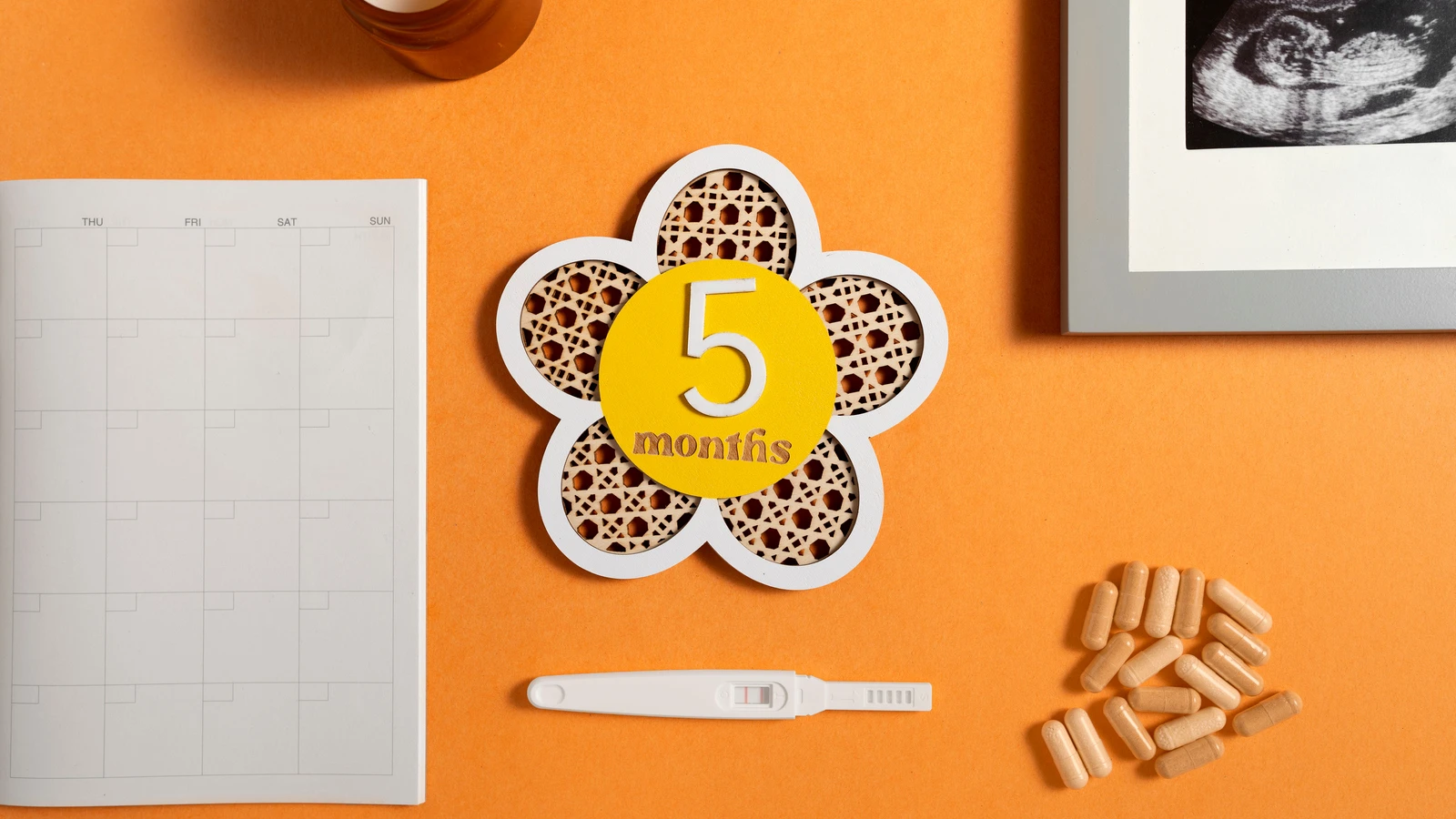
Entering the fifth month of pregnancy, or around weeks 18 to 22, your little one’s development in the womb becomes even more exciting to follow. During this stage, which is part of the second trimester, the fetus continues to grow, from its body size and facial features to the development of its senses and various organs.
As the fetus grows, Moms may also begin to notice more noticeable changes, including your little one’s movements that are gradually becoming easier to feel. So, what does fetal development look like, and what is the position of a fetus at 5 months pregnant? Let’s take a closer look!
Fetal Development at 5 Months
At 5 months pregnant, fetal development becomes increasingly noticeable. Various parts of the body continue to grow and develop, while some organs and senses are beginning to function.
1. Fetal Size and Weight at 5 Months
Entering the fifth month, the fetus continues to grow as its body develops. At around week 20, the fetus can measure approximately 25 cm from head to heel and weigh around 300 grams. However, size and weight can vary from one pregnancy to another.
At this stage, fetal growth is not only marked by increases in length and weight. The body proportions are also beginning to resemble those of a baby more closely, making the body shape more clearly visible during an ultrasound examination.
2. Facial Features and Body Parts Are Becoming More Defined
The fetus’s body shape becomes increasingly developed at 5 months. The face begins to look more defined, including the nose, lips, and ears. Body parts such as the hands, feet, fingers, and nails also continue to develop.
During this stage, the fetus also begins to develop more distinct facial features. Although still small, these developments make the fetus look increasingly like the baby who will be born.
3. The Skin Is Protected by Vernix and Lanugo
At 5 months, the fetus’s skin is still thin and sensitive. However, the body begins to be protected by vernix caseosa, a white, creamy coating that helps protect the skin from prolonged exposure to amniotic fluid.
In addition to vernix, the fetus also begins to develop fine hair called lanugo. This fine hair grows over much of the body and helps keep the vernix attached to the skin. Most lanugo will gradually disappear before delivery.
4. Muscles, Bones, and the Nervous System Continue to Develop
Bone and muscle development becomes increasingly active at 5 months pregnant. Bones that were previously still developing begin to strengthen, while the muscles continue to develop, allowing the fetus to make various movements inside the womb.
The nervous system is also developing rapidly. The brain continues to grow and begins coordinating various body activities. The development of the nervous and muscular systems helps support the fetus’s increasingly active movements.
5. The Fetus’s Hearing Is Developing
During the second trimester, the fetus’s sense of hearing begins to develop. The structures of the ears become increasingly formed, allowing the fetus to gradually detect sounds from its surroundings.
Sounds from inside Moms’ body, such as the heartbeat and blood flow, are among the sounds the fetus may hear. As pregnancy progresses, the fetus also becomes increasingly able to respond to sound stimuli.
Moms can talk to your little one or read stories aloud. However, there is no need to use very loud sounds or provide excessive auditory stimulation.
6. The Organs Continue to Develop
Various fetal organs continue to mature at 5 months. The heart is already beating and can be monitored during prenatal examinations, while the lungs and digestive system are still developing.
The fetal kidneys are also functioning and producing urine, which is then released into the amniotic fluid. The reproductive organs are developing as well, so the fetus’s sex can usually be identified through an ultrasound examination, although the result depends on the fetal position and examination conditions.
7. Fetal Movements at 5 Months Pregnant
One of the moments many Moms look forward to is feeling the fetus move for the first time. These first movements are often called quickening and generally begin during the second trimester, although the timing can vary from one pregnancy to another.
Early movements may feel like small twitches, bubbles, or a gentle movement inside the abdomen. As pregnancy progresses, fetal movements usually become more noticeable.
If this is your first pregnancy, you may not feel fetal movement until later in pregnancy compared with someone who has been pregnant before. So, there is no need to worry if you do not feel movement at the beginning of the fifth month.
Fetal Position at 5 Months
At 5 months pregnant, the fetus still has plenty of room to move inside the womb. Therefore, the fetal position can change frequently and has not necessarily settled into one particular position.
The fetus may be positioned with its head up, head down, sideways, or may change positions several times a day. This is generally normal because the fetus is still small enough to move freely inside the womb.
So, if an ultrasound shows that the fetus’s head is still positioned upward or sideways at 5 months, Moms do not need to worry right away. Fetal position generally becomes more important to monitor as the pregnancy gets closer to delivery.
Regular prenatal checkups with an obstetrician remain important to monitor the fetus’s growth, position, and overall condition throughout pregnancy.
How to Maintain the Health of Moms and the Fetus at 5 Months
Entering the second trimester, maintaining good health remains important to support fetal growth and development. Some things Moms can do include:
1. Eat a Balanced, Nutritious Diet
Make sure your daily meals contain protein, carbohydrates, healthy fats, vitamins, and minerals. For example, Moms can include rice, fish or eggs, green vegetables, fruits, and nuts in your daily meals.
2. Meet Your Fluid Needs
Generally, pregnant women are advised to drink around 8–10 glasses of water per day, or approximately 2 liters. However, fluid needs can vary depending on activity level, individual conditions, and your doctor’s recommendations.
3. Take Supplements as Recommended by Your Doctor
Pregnancy supplements commonly include folic acid, iron, calcium, vitamin D, and DHA/omega-3. These supplements should be taken according to the individual needs of the pregnant mother and the doctor’s recommendations.
4. Stay Physically Active Safely
Light to moderate physical activity can help maintain fitness during pregnancy if Moms’ condition allows it. Examples include leisurely walking or doing pregnancy exercises as recommended by a doctor or midwife.
5. Get Enough Rest
Moms need adequate rest, such as getting 7–9 hours of sleep each night and taking breaks during the day when needed. It is also important to listen to your body and rest whenever you begin to feel tired.
6. Avoid Smoking and Alcohol
Exposure to cigarettes, including secondhand smoke, as well as alcohol consumption during pregnancy can harm fetal development.
7. Have Regular Prenatal Checkups
Regular prenatal checkups mean attending scheduled and recurring appointments according to your stage of pregnancy, rather than only visiting a doctor when you experience symptoms. During the second trimester, checkups are generally scheduled once a month.
Conclusion
At 5 months pregnant, the fetus undergoes various stages of development, from growth in body size and the formation of facial and body features to the development of the senses and increasingly active movements. The fetal position can also continue to change because there is still plenty of space inside the womb, so the position of the head or body is generally not something to worry about at this stage.
To support your little one’s growth and development, Moms can maintain a nutritious diet, meet your fluid needs, stay active, get enough rest, and attend regular prenatal checkups. Don’t forget to prepare for your little one’s arrival with quality diapers from MAKUKU, designed to provide comfort and help keep your baby’s skin dry after birth.
FAQ
1. Is a pregnant belly already large at 5 months?
Generally, the belly begins to look more noticeably enlarged at 5 months pregnant, but its size can vary from one Mom to another.
2. Can the baby’s sex be determined at 5 months pregnant?
The baby’s sex can usually be determined at 5 months pregnant (around 18–22 weeks) through an ultrasound examination because the reproductive organs have developed and may be visible clearly enough.
3. What does a mother feel at 5 months pregnant?
Moms may experience a growing belly, fetal movements, changes in appetite, back pain, or other mild pregnancy-related symptoms.